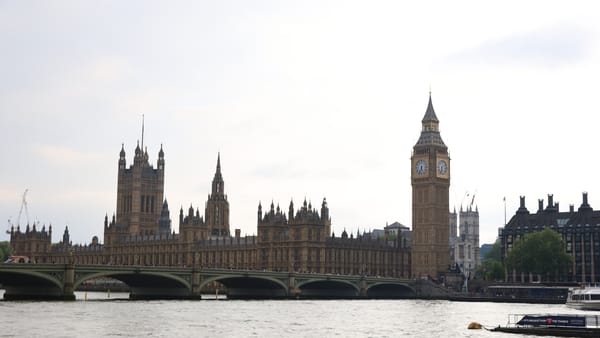
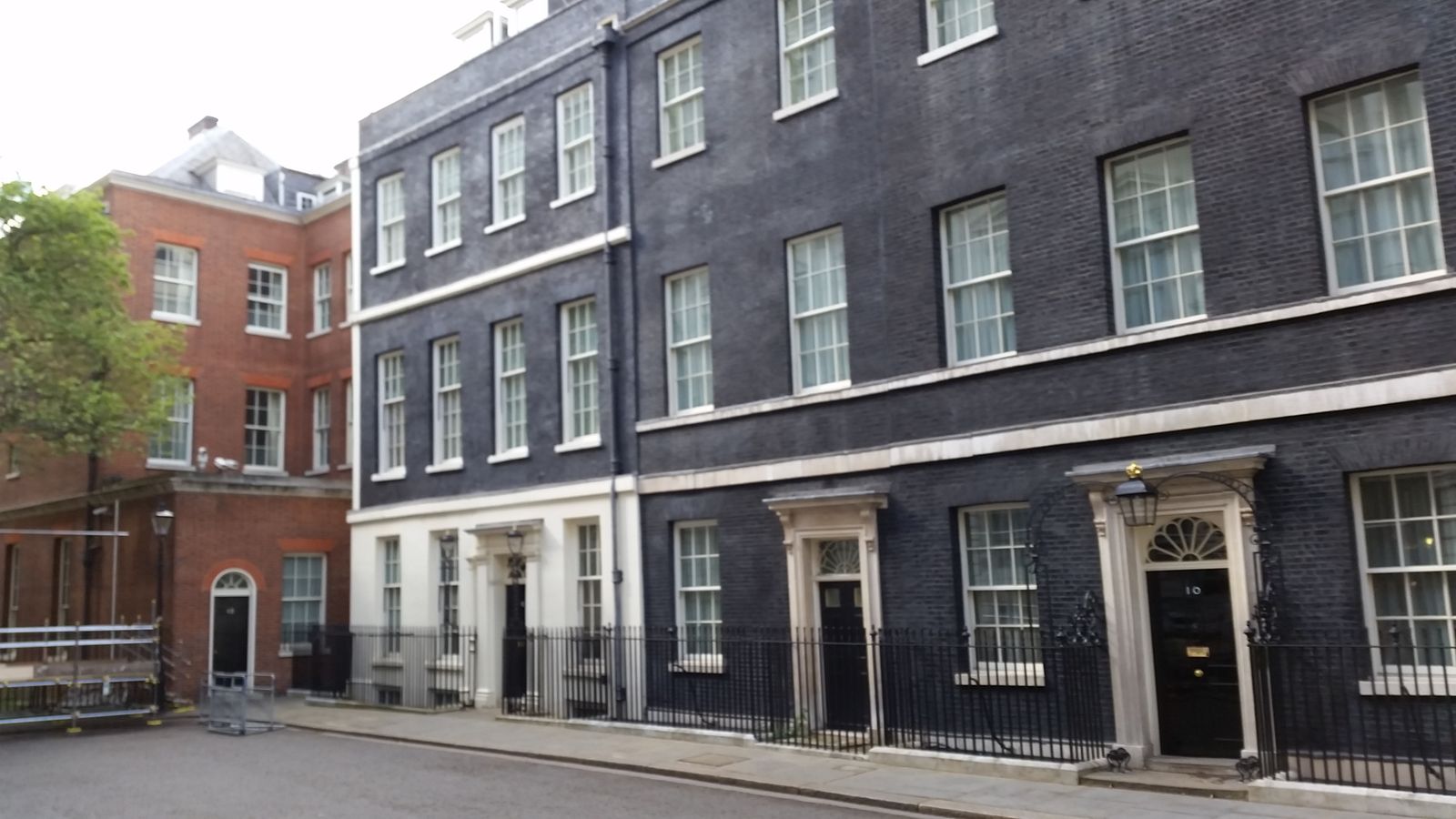
2024 was a great year for Britain’s Labour Party, and for one man in particular: party leader Keir Starmer.
After 14 years in the political wilderness, a time in which the Conservative Party was dominant, the Labour Party won a landslide victory in the 2024 general elections.
Even the word landslide doesn’t feel sufficient to describe just how decisive this victory was. Labour went from having 211 members in the House of Commons, to 411, with a 174-seat majority. To put that in perspective, that’s a larger majority than Labour has won under any other leader not called Tony Blair — and Blair famously went on to serve a full decade in office. At the moment he entered Downing Street, it seemed entirely possible that Keir Starmer might replicate the feat.
Situation Brief
- Keir Starmer’s Labour government squandered its 2024 landslide majority through unpopular welfare cuts, scandals, and policy U-turns within two years.
- Starmer’s net approval plummeted to -46% by November 2025, with Labour suffering catastrophic losses in 2026 local elections to Reform UK and the Greens.
- Potential leadership successors include Wes Streeting, Angela Rayner, Ed Miliband, and Andy Burnham, with Burnham leading member polls despite not being in Parliament.
- Labour faces existential threats from losing voters on both left and right simultaneously, plus historic defeats in Wales and Scotland.
- Voters are abandoning Labour due to stagnant household incomes and perceived failures on immigration, despite actual net migration falling sharply under the government.
Even the biggest pessimists assumed he’d at least manage a full five-year term.
Oh, how the mighty have fallen.
In less than two years, Starmer has gone from being the saviour of the Labour Party to the man helping pull it towards electoral oblivion. And while Labour currently seems to be hoping that a change in leadership might salvage its victorious 2024 electoral coalition, there are good reasons to doubt this will be the case.
Reasons that could now spell doom for the entire Labour Party.
Knives Out
The wave of goodwill that carried Starmer into Downing Street in the summer of 2024 didn’t last long. Within months of taking office, the new Prime Minister was making decisions that would steadily drain his party’s support until the situation got so bad that we decided to make this video. And that is usually not a good sign, sort of like seeing JD Vance campaign for a European populist who desperately needs to win.
The first major issue for the Labour government was winter fuel payments.
In 2024, Rachel Reeves, the Chancellor of the Exchequer announced that a universal payment designed to help the elderly with energy costs each year would no longer go to the roughly ten million pensioners who had previously received it. The money would instead go to those on means tested benefits and pension credit — basically, only to those in poverty.
As you can imagine this was a deeply unpopular decision, as taking money from voters usually is. But Reeves’s plan went further than just annoying wealthy old people who could afford the three hundred pound annual hit — the government’s own figures estimated that these cuts would’ve forced 100,000 pensioners into poverty by 2026.
For many voters, the idea of electing a Labour government that then started shoving the elderly into poverty was a little like if Americans voted in the GOP only to have them suddenly start taking people’s guns away. That sense of betrayal pissed people off far more than it would’ve had the Conservative Party brought in an identical policy… and all in the name of savings that even Reeves admitted wouldn’t amount to very much.
The government would eventually reverse course, with the benefits going to everyone who had received them before, but in many ways this just made matters worse. Labour took the political hit of doing something deeply unpopular, but without any of the meager savings that would’ve resulted from following through with the policy.
As you’ll soon see, this has been par for the course for Labour since 2024. Insisting that they’ll do the unpopular thing to the point that the electorate loathes them… only to suddenly panic about that loathing and perform a u-turn.
In 2025, for example, the government introduced sweeping changes to the benefits system that were aimed at saving £5bn a year. The changes would have frozen extra benefit payments for health conditions, made it harder for people with less severe conditions to claim disability payments, and would have meant that people under the age of 22 could have been prevented from claiming additional payments for health conditions. According to Hyphen Online, these changes would’ve affected up to 3 million people, with the government assessing that the cuts would push 250,000 people into poverty.
Care to guess what the government did next? After taking the political hit, they retreated faster than a Frenchman, with more than 100 Labour MPs threatening to vote against the bill.
For its part, the government defended all these cuts as necessary to deal with what it claimed was a massive £22 billion hole in the budget that had been left by the previous Conservative government. Chancellor Reeves told Parliament that if this was left unaddressed, it would result in a 25% increase in the budget deficit in 2024. However, Reeves had effectively hamstrung herself by campaigning on a manifesto that ruled out raising any major taxes to balance the budget. And so, Labour was left scrabbling around for things to cut, like a Tory tribute act.
Watch on HomeFronts
Watch the full video analysis on the HomeFronts YouTube channel, presented by Simon Whistler.
If this was all that the government had to deal with, maybe the political winds would have shifted as the news cycle moved on to other topics. However, Starmer also had the misfortune of having a cabinet plagued with scandal.
Angela Rayner, the nation’s deputy Prime Minister and deputy leader of the Labour Party, was widely seen as a voice for the party’s disgruntled left wing against Starmer’s centrist conservatism. A teenage mother who grew up on an estate, Rayner was supposed to be living proof that the upper echelons of the Labour party still represented the working class it was founded for. Given a fair chunk of the working class vote was hemorrhaging to the populist Reform UK, this was kind of a big deal.
But then it emerged that she had underpaid £40,000 in property taxes and she was forced to resign.
While Rayner would later be cleared by the taxman, it still left a stench around the party, especially since Labour had portrayed itself as the competent, sober antidote to the wild scandals seen under Boris Johnson. But if the Rayner scandal had a bit of a whiff about it, what came next would be like thrusting the public’s face into an open sewer.
In late 2024, Starmer appointed Peter Mandelson as the UK’s ambassador to the United States. The rationale behind the appointment was straightforward enough, with The Independent reporting that the Prime Minister believed Mandelson’s trade expertise and networking ability would prove useful during a complicated period for UK-U.S. relations.
What the government had apparently overlooked, or chosen to ignore, was that Mandelson had a history of association with the convicted sex offender Jeffrey Epstein. A birthday album compiled for Epstein in 2003 contained a handwritten note from Mandelson in which he called Epstein, “my best pal.” A trove of Epstein-related documents later released by the US Justice Department included emails suggesting that Mandelson had passed on sensitive government information to Epstein in 2009, leading the police to investigate and arrest Mandelson on suspicion of misconduct in public office.
The worst part? Vetting had revealed some of Mandelson’s Epstein links prior to his appointment. But Starmer overrode objections to ensure the man known as the Prince of Darkness got his post.
By November 2025, Starmer’s net approval had fallen to -46%, putting him level with Theresa May at her lowest and below every other prime minister in living memory except Liz Truss, who famously couldn’t outlast a lettuce.
By May this year, the pressure had reached a tipping point. In the local elections that took place across England, and the devolved elections in Scotland and Wales, Labour were absolutely mullered. In England, Reform devoured their vote to the right, while the Green party devoured it to the left. Having been predicted in 2024 to win back control of Scotland’s devolved parliament, Labour instead settled for a distant second to the SNP. And in Wales, the party lost their first countrywide election in over a century.
On May 12th, four junior ministers resigned from the government in protest calling on Starmer to go. Two days later, Starmer’s cabinet lost the biggest name to date; Wes Streeting, the Secretary for Health and Social Care. In his resignation letter, Streeting said that having lost confidence in Starmer’s leadership it would be “dishonourable and unprincipled” for him to remain as part of the PM’s government.
He also had a line that perfectly captures just how little trust the Labour Party has in their leader. Quoting, “Where, here we need vision, we have a vacuum. Where we need direction, we have drift.”
Despite all this pressure, Starmer has said he is staying, however, most observers of British politics believe that it is a question of when, not if, he is ousted from Number 10. This leads us to two major questions… who will replace him? And can they possibly lead Labour back from the abyss?
The Names
So far, we’ve already met two of the people who could replace Starmer as Prime Minister. First, there’s Wes Streeting who recently confirmed that he would be vying to replace the leader.
In his time as Health Secretary, he has had some major achievements, including reducing waiting times, and waiting lists in Britain’s national health service. According to data published by the NHS, the NHS had met its interim target of 65% of patients being seen within 18 weeks by March 2026, and waiting lists had dropped to their lowest levels in three and a half years. Streeting has a strong media presence, is popular among the party’s right, and, according to The Irish Times, he is the candidate who’s the most ready for a leadership contest.
However, some of the advantages that he has going for him, might very well prevent him from being the next PM. For one, his closeness to the right wing of the party, and specifically to the Blairite Progress wing of the party, named for former Labour PM Tony Blair, means that he is distrusted by the party’s left. In fact, some of his own supporters suspect that he might be too right wing for the Labour grassroots who he will need to win over in case of a leadership contest. According to a Compass survey, of more than 1,000 labour members, only 11% would pick Streeting to succeed Starmer.
Something else working against Streeting is the fact that he was formerly close to Mandelson, and any association with the Prince of Darkness is toxic to voters right now.
Someone who won’t have to worry about being tied to Mandelson is Angela Rayner. According to the Telegraph, she told Starmer not to appoint Mandelson because of public evidence that he had maintained close ties with Epstein. Since her resignation, she has attempted to distance herself from Keir Starmer’s project, emerging as even more representative of the party’s left.
During a speech to Labour activists of the left-wing Mainstream group, she criticized the party saying that it had come to represent the establishment and not the working people, adding that they needed to change course as they were running out of time to deliver for voters.
Despite this rebrand — and despite the fact that she was later exonerated in the tax affair — voters don’t really seem to be convinced. According to the Compass survey we mentioned earlier, she has roughly the same level of support as Streeting… and that of another name who might throw his hat into the ring.
Ed Miliband is currently the Secretary for Energy Security and Net Zero. He’s also a familiar figure to Labour constituents, having headed the party as its first Jewish leader from 2010 to 2015, before resigning after decisively losing the 2015 general election to the Conservatives. According to Westminster gossip, Miliband has been mulling a leadership bid, and has been speaking with MPs about whether to run as a soft left candidate, ostensibly to stop Streeting from becoming Prime Minister.
However, politicians have long memories, and Miliband will struggle to shake off the image of an unsuccessful leader following the 2015 elections.
So far, the person with the most support, according to both the Compass Survey and a YouGov poll, is someone who, at the time of recording, isn’t in the House of Commons, and doesn’t have the most straightforward path to a leadership challenge — Andy Burnham, a former MP and the current Mayor of Greater Manchester. In the Compass survey, 42% of the respondents said they would support him, while in the YouGov poll, he had the support of 47% of the respondents.
And it’s easy to see why.
In a recent piece for the Guardian, Neal Lawson, director of Compass, described Burnham as electoral gold dust because of who he is and what he has done. His biggest policy win to date is the renationalisation of bus routes across Greater Manchester and capping bus fares at £2 at a time when they were rising across the UK, contributing to the rising cost of living.
Burnham has also built an image as a politician who cares deeply about his constituents, most notably by standing up to the Conservative government over what he considered to be a weak and confusing support package during the COVID pandemic. This earned him the title, the King of the North.
But, just like the real British King, the King of the North is not in parliament. And it’s not for a lack of trying.
When the Gorton and Denton parliamentary seat fell vacant after the previous MP resigned, Burnham put his name forward as a possible contender. He needed the approval of the Labour Party’s National Executive Committee (NEC), a body that Starmer is a member of by virtue of being the party’s leader, before he could be declared a candidate for the seat.
And given what we’ve said so far, you can pretty much imagine what happened next.
The NEC blocked him from vying for the seat, saying they were concerned about the cost of fighting a mayoral by-election in Greater Manchester. For most people, however, this was a pretty transparent ploy to keep him out of parliament to avoid triggering a leadership challenge to Starmer. In response, Labour MPs warned that Starmer had only managed to bring forward the timetable of a leadership challenge by doing this… especially since Gorton and Denton was then won by the Green Party.
But Burnham has found a possible route back to parliament after Labour MP Josh Simons, representing Makerfield, chose to resign to clear a path for Burnham’s return.
Of all the paths Burnham could have chosen, this is the hardest one. That’s because, while Makerfield has been considered a solidly safe Labour seat for decades, the electorate has been slowly shifting away from Labour. During the May 2026 local elections, Reform UK won every single council seat within the constituency, garnering 50% of the vote, compared to Labour’s 27%.
Before Burnham was announced as the candidate, pollsters gave Labour a 5% chance of keeping the seat. In his Substack, political analyst Sam Freedman has noted that Labour would lose the seat if anyone but Burnham stood there. With Burnham selected as candidate, the Labour Party are now the favorites. But a victory is not guaranteed.
Should Burnham win, he can say that he has done one thing that Starmer has so far struggled to do: beat Reform at the ballot box. And that will all but guarantee his place as the next Prime Minister.
If he can’t, then Labour might be in even more trouble than anyone realizes.
The Difficult Road Ahead
Regardless of who takes the mantle from Starmer, or whether Starmer survives the coming leadership challenge, the Labour Party faces a difficult road ahead.
So far, we’ve mentioned how Labour lost crucial elections including losing every single council seat in Makersfield to Reform, but this doesn’t begin to capture the degree to which the bottom seems to have fallen out of Labour.
Those local election results we mentioned a moment ago? They were beyond dire. They were catastrophic. The only reason we’re not calling them “apocalyptic” is because pre-election polling showed Labour losing even more council seats than the 1,496 they ultimately lost.
As to where the Labour vote is going… well, YouGov revealed that just 46% of voters who voted for Labour in the 2024 general elections, remained loyal to the party in the 2026 council elections. By comparison, 55% of the voters who chose the Conservative party remained loyal. More fascinating still, is where Labour’s voters are headed — 22% went to the Greens, while 6% voted for Reform.
The bigger question is… why are they leaving?
For some, particularly those who moved to Reform, there’s a feeling that the Labour Party hasn’t fulfilled its promises, especially on lowering the cost of living.
This is a major issue especially because, as the Joseph Rowntree Foundation (JRF) noted, household disposable incomes were lower in 2024 than they were in 2019, the first time they had fallen over a full parliamentary term since records began being kept in 1961. The economic anxiety this triggered was a significant factor in why the Conservatives lost the 2024 elections, but while voters expected Labour to make significant changes, this hasn’t happened yet.
According to JRF, household incomes have flattened since the elections and are expected to be, on average, £500 lower at the end of this parliament, only the second time that this has happened.
The economy has clearly not delivered what voters were hoping for, and it doesn’t seem like it will any time soon, as GDP grew by just 0.1% in the last quarter of 2025. A lot of this is not Labour’s fault, because after all, they’ve only been in power since July 2024, and they can’t reasonably be expected to fix everything in under a year. There are also international factors at play including wars in Ukraine, and more recently Iran, which have an outsized impact on the UK economy. But still… if you’re elected on a pledge to get the economy back on track and make voters feel better off, and then fail to pass reforms that do either… well, perhaps disenchantment is inevitable.
Another reason why voters are abandoning Labour is because of immigration, or rather, their perception of immigration. According to data from the Office of National Statistics (ONS), net migration to the UK — the difference between the number of people moving into and leaving the country — in 2025 stood at 171,000, meaning that it had halved in the past year and fallen by over 75% since its 2023 peak under the Conservatives. More importantly, it is expected to fall even further, to below 100,000 this year.
Net migration under 100,000 is something the Tory party has promised voters since the days of David Cameron, but has never delivered on. Instead, under Boris Johnson it soared to nearly a million a year. So, you’d expect Labour to be reaping the rewards of slashing immigration to near-record lows.
However, according to the annual Immigration Attitudes Tracker, just 16% of people thought migration had fallen in 2025, while 49% believed that it had increased, and 51% expected it to rise again in 2026. This disconnect has fueled a belief that Labour is not handling the immigration issue sufficiently. And given that, according to a Gallup survey, most Britons say that immigration is their main concern, that’s something of a problem.
And so you get the, frankly, bizarre situation whereby immigration is falling sharply under Labour but voters don’t believe it, while Reform packs its front benches with former Conservative cabinet members who oversaw the biggest immigration spike in recent British history… and yet those same voters are all like “oh yeah, those guys. They’ll get immigration down for sure.”
And this madness cuts both ways. Labour are losing voters to Reform for many reasons, but anger at immigration is a key one. Yet, they’re simultaneously losing voters to the Greens and Lib Dems who believe Labour has become too rightwing on many issues, including immigration.
This is why we didn’t just title this video “Labour is in trouble”, but instead noted that they’re doomed. Because, unless Andy Burnham manages to block the loss of support to the left at least, the party is losing supporters on both sides of the political divide. Meanwhile, they’re becoming toxic in Scotland, and being displaced in Wales by both Reform on the right and Plaid Cymru on the left.
And this is a huge deal. While Scotland has been trending away from Labour for nearly two decades, Wales is the party’s birthplace. Its spiritual home. To have lost Wales after a century of dominance suggests that the problems facing Labour today could be existential, beyond anything the party suffered even during the peak years of Thatcherism.
Now, it could be that all this really is just an issue with Keir Starmer. That booting him will reset the party’s fortunes, much like how defenestrating Justin Trudeau turned Canada’s Liberals from a party heading a once-in-a-generation defeat in 2025 into one that now holds a majority in the country’s parliament.
Or… it could be that the rot really is deeper. That whoever winds up taking over from Starmer won’t go down in history as Labour’s savior… but as the person who oversaw the final death of the party.
Key Takeaways
- Keir Starmer’s Labour government squandered its 2024 landslide majority through unpopular welfare cuts, scandals, and policy U-turns within two years.
- Starmer’s net approval plummeted to -46% by November 2025, with Labour suffering catastrophic losses in 2026 local elections to Reform UK and the Greens.
- Potential leadership successors include Wes Streeting, Angela Rayner, Ed Miliband, and Andy Burnham, with Burnham leading member polls despite not being in Parliament.
- Labour faces existential threats from losing voters on both left and right simultaneously, plus historic defeats in Wales and Scotland.
- Voters are abandoning Labour due to stagnant household incomes and perceived failures on immigration, despite actual net migration falling sharply under the government.

Simon Whistler
Simon Whistler is one of YouTube's most prolific educational creators. HomeFronts is his deep dive into geopolitics, modern conflict, military history, and the civilian and societal dimensions of global events.
Frequently Asked Questions
What was the scale of Labour’s victory in the 2024 general election?
Labour went from having 211 members in the House of Commons to 411, with a 174-seat majority. This was a larger majority than Labour has won under any other leader except Tony Blair.
What was the first major issue that caused problems for the Labour government after taking office?
The first major issue was winter fuel payments. In 2024, Chancellor Rachel Reeves announced that a universal payment designed to help the elderly with energy costs would no longer go to roughly ten million pensioners who had previously received it, instead only going to those on means-tested benefits and pension credit.
What was the estimated impact of the winter fuel payment cuts on pensioners?
The government’s own figures estimated that the winter fuel payment cuts would have forced 100,000 pensioners into poverty by 2026.
What happened with Labour’s 2025 benefits system changes?
In 2025, the government introduced sweeping changes to the benefits system aimed at saving £5bn a year, which would have frozen extra benefit payments for health conditions, made it harder for people with less severe conditions to claim disability payments, and prevented people under 22 from claiming additional payments for health conditions. After taking the political hit, the government retreated when more than 100 Labour MPs threatened to vote against the bill.
Why did Chancellor Reeves claim the cuts were necessary?
The government defended the cuts as necessary to deal with what it claimed was a massive £22 billion hole in the budget left by the previous Conservative government. Reeves told Parliament that if left unaddressed, it would result in a 25% increase in the budget deficit in 2024.
What scandal involving Angela Rayner affected the Labour government?
Angela Rayner, the deputy Prime Minister and deputy leader of the Labour Party, was found to have underpaid £40,000 in property taxes and was forced to resign. While she was later cleared by the taxman, it left a stench around the party.
What controversy surrounded Peter Mandelson’s appointment as UK ambassador to the United States?
Peter Mandelson had a history of association with convicted sex offender Jeffrey Epstein, including a handwritten note in a 2003 birthday album calling Epstein ‘my best pal.’ Emails suggested he passed sensitive government information to Epstein in 2009, leading to police investigating and arresting him on suspicion of misconduct in public office. Vetting had revealed some of these links prior to appointment, but Starmer overrode objections.
How low did Starmer’s net approval fall by November 2025?
By November 2025, Starmer’s net approval had fallen to -46%, putting him level with Theresa May at her lowest and below every other prime minister in living memory except Liz Truss.
What were the results of the May 2026 local and devolved elections for Labour?
Labour was ‘absolutely mullered.’ In England, Reform devoured their vote to the right while the Green party devoured it to the left. Labour finished a distant second to the SNP in Scotland, and in Wales, the party lost their first countrywide election in over a century.
Who resigned from Starmer’s cabinet on May 14th, and what did they say?
Wes Streeting, the Secretary for Health and Social Care, resigned. In his resignation letter, he said that having lost confidence in Starmer’s leadership it would be ‘dishonourable and unprincipled’ for him to remain. He also stated: ‘Where, here we need vision, we have a vacuum. Where we need direction, we have drift.’
Sources
- Original HomeFronts video: Britain’s Labour Party is Doomed
- https://www.bbc.com/news/articles/cx02zdd92zdo
- https://www.independent.co.uk/news/uk/politics/winter-fuel-cuts-u-turn-labour-starmer-b2755288.html
- https://www.independent.co.uk/news/uk/government-liz-kendall-scottish-labour-rachel-reeves-labour-b2649975.html
- https://hyphenonline.com/2025/06/25/labour-benefits-welfare-reform-vote-rebellion-shehab-khan/
- https://www.jrf.org.uk/news/cuts-to-push-250000-into-poverty-as-living-standards-for-the-poorest-under-continuing-assault
- https://www.france24.com/en/live-news/20240729-uk-facing-%C2%A322bn-hole-in-public-finances-minister
- https://www.bbc.com/news/articles/cpvnlxxp8jko
- https://www.independent.co.uk/news/uk/politics/peter-mandelson-uk-ambassador-us-donald-trump-b2667479.html
- https://www.theguardian.com/politics/2026/feb/04/how-was-mandelson-vetted-role-ambassador-what-did-starmer-know-epstein-explainer
- https://www.pbs.org/newshour/amp/world/uk-ambassador-to-u-s-under-scrutiny-over-his-links-to-best-pal-epstein
- https://labourlist.org/2026/05/labourlist-labour-mp-starmer-resignation-tracker/
- https://www.bbc.com/news/articles/ce8p7p83vdzo
- https://www.bmj.com/content/393/bmj-2026-607784
- https://www.irishtimes.com/world/uk/2026/05/12/labour-leadership-wes-streeting-faces-narrow-road-to-party-members-favour/
- https://www.independent.co.uk/voices/starmer-angela-rayner-wes-streeting-labour-leadership-b2806714.html
- https://archive.is/G2UxD
- https://www.independent.co.uk/news/uk/politics/angela-rayner-labour-leadership-starmer-prime-minister-b2940799.html
- https://www.theguardian.com/politics/2025/sep/04/its-a-disgrace-rayners-constituents-call-for-her-resignation-after-stamp-duty-row
- https://www.huffingtonpost.co.uk/entry/ed-miliband-mulls-labour-leadership-bid-as-cabinet-tries-to-rally-support-for-starmer_uk_6a04b3dce4b040d76f6463f7
- https://yougov.com/en-gb/articles/54797-what-do-labour-members-think-of-the-party-leadership-may-2026
- https://www.theguardian.com/commentisfree/2026/may/12/andy-burnham-labour-reform-prime-minister-greater-manchester-mayor-westminster
- https://theconversation.com/andy-burnham-what-has-made-the-king-of-the-north-so-popular-283231
- https://www.independent.co.uk/news/uk/politics/andy-burnham-blocked-labour-mp-why-explained-b2907245.html
- https://www.independent.co.uk/news/uk/politics/starmer-burnham-streeting-rayner-labour-b2909684.html
- https://www.theguardian.com/politics/2026/may/18/makerfield-byelection-andy-burnham-labour-electoral-problems-analysis
- https://yougov.com/en-gb/articles/54811-labours-voter-coalition-broke-more-to-left-than-right-at-2026-local-elections
- https://www.jrf.org.uk/public-attitudes/voters-blame-politicians-for-cost-of-living-crisis
- https://www.ft.com/content/8d77df48-ae4f-4c14-be04-13406221db48?syn-25a6b1a6=1
- https://www.ons.gov.uk/peoplepopulationandcommunity/populationandmigration/internationalmigration/bulletins/longterminternationalmigrationprovisional/yearendingdecember2025
- https://www.britishfuture.org/wp-content/uploads/2026/05/Tracker-report-2026.Final_-1.pdf
- https://news.gallup.com/poll/701990/leads-world-concern-migration.aspx
- Hero image source by RachelH_ / openverse, by.