

Marco Rubio has been a busy man. The Secretary of State has, by various reckonings, become the shadow architect of America’s posture in Venezuela, a central figure in shaping what comes after the conflict with Iran, and the driving force behind a blockade of Cuba that bears all the hallmarks of a personal crusade. But it is back home, in the everyday machinery of American politics, that Rubio appears to be on the precipice of something far larger than any single foreign-policy file.
For the first year of Donald Trump’s second term, the presumptive heir to the president’s movement seemed obvious. That heir was Vice President JD Vance. Rubio was the top diplomat; Vance was a heartbeat away from the presidency itself. In MAGA circles, Rubio was still saddled with the nickname Little Marco, a souvenir of his humiliation on a 2016 debate stage, while Vance was the man who commanded respect from the people who mattered most in Trump’s orbit.
If Rubio got lucky, the thinking went, he might land at the bottom of a Vance ticket in 2028 — and even that was far from guaranteed.
Situation Brief
- Marco Rubio has rapidly overtaken JD Vance as the front-runner to inherit Donald Trump’s political movement heading into the 2028 presidential race.
- Vance’s standing within the Republican Party has diminished, in part because his anti-war instincts clashed with an aggressive 2026 foreign policy that included action against Venezuela, Iran, and Cuba.
- Rubio has positioned himself as the indispensable conduit translating Trump’s geopolitical ambitions into coherent strategy, earning the president’s praise and a stack of overlapping roles.
- The Republican donor class, polled at Mar-a-Lago, broke overwhelmingly in Rubio’s favor over Vance as Trump’s preferred successor.
- A core strategic question divides the two men: whether to claim Trump’s cultural MAGA movement or the political legacy of his administration — and Rubio is better placed to claim both.
Spin the clock forward to the early months of 2026, and the picture has inverted. Rubio’s stock is rising while Vance has gone quiet. Rubio is making critical decisions while Vance, by several accounts, has been left at the proverbial kids’ table. The Republican Party’s powerful donor class has grown discontented with the young vice president and has come courting Rubio in search of an elder statesman.
As American politicians begin taking their positions ahead of the 2028 presidential contest, the country’s right wing faces an unavoidable question: is Marco Rubio becoming the new face of the MAGA movement?
A Movement Without an Heir
Whether you love him, hate him, or land somewhere in between, it is difficult to deny that Donald Trump is a singular force in American politics. He has not merely assembled a voting coalition, as most politicians do. He has built a far larger cultural movement, and elements of that movement are practically guaranteed to outlast his own time on the national stage.
That durability is also the source of a looming problem. When the leader of the MAGA coalition eventually steps away from the limelight, a bloc that commands roughly half of American domestic politics will be thrown into a succession crisis. As of early 2026, just months out from the midterm elections, Trump has no clear successor. For a movement so dependent on a single, unrepeatable personality, such crises have a way of turning vicious.
The absence of an heir is, in large part, deliberate. Naming a single successor would hand that person a substantial share of political power — power that could be turned around to undercut, outmaneuver, or even prematurely sideline the man at the top. Trump also appears to relish the contest among his lieutenants, both as classic political spectacle and because there is something especially cutting about MAGA infighting.
The Two-Man Race
Over his second term, Trump has at least narrowed the field. Most of the time, he and his allies seem to agree on the shortlist: when the big man steps down, the throne passes to either his Vice President or his Secretary of State. Depending on the day, that contest reads as cordial, feisty, or flatly denied by both camps.
Rubio has pledged not to run in 2028 if Vance enters the race. Vance, for his part, has joked with press photographers about making Rubio “look really shitty compared to me.” Trump has been characteristically slippery — endorsing both men at once, declining to back either clearly, and at one point suggesting they simply run together as president and vice president.
Watch on HomeFronts
Watch the full video analysis on the HomeFronts YouTube channel, presented by Simon Whistler.
To their credit, the two rivals keep most of the friction out of public view. They remain deferential to their commander-in-chief and rarely contradict one another in the open. The occasional shoving matches reported from inside MAGA-world tend to involve currying favor and undercutting from behind closed doors. Since early 2025, though, the balance had seemed settled: barring a scandal, a rupture with Trump, or a personal crisis, 2028 belonged to Vance, with Rubio kept on the bench as an alternate.
Vance Goes Quiet
Then, over the first months of 2026, Vance’s position within the party began to erode at speed. He is no longer the operator he once was. He has gone largely silent on social media. He has absorbed boos and jeers at a handful of recent public appearances. When he does surface, he is more muted and reserved — a shadow of the firebrand who once nearly threw Ukrainian President Volodymyr Zelenskyy out of the Oval Office.
Much of the trouble traces to foreign policy. Vance is famously anti-war, anti-intervention, and skeptical of regime change. Yet since the start of the year he has had to watch his president seize the leader of Venezuela from a personal bunker, blockade Cuba with the evident aim of regime change, and go to war with Iran alongside Israel. Those instincts are well understood inside the White House, and recently they have left Vance sequestered from key decision-making sessions.
He has found himself parked with other officials consigned to the time-out chair — figures like Director of National Intelligence Tulsi Gabbard, who was famously photographed on a Hawaiian beach posting yoga photos to Instagram while the United States carried out its Venezuela operation. For a man who was supposed to be a heartbeat from the presidency, it has been a striking demotion in influence.
Rubio Rises to the Occasion
Where Vance has receded, Rubio has stepped forward. Insider accounts from the White House openly credit him with seizing the political initiative — first in Venezuela, then in Iran, and now in Cuba and wherever else the administration turns its attention.
Rubio has made himself a kind of political conduit, bridging the gap between Trump’s raw geopolitical will and a coherent foreign policy. He has worked to translate ambition into diplomatic and military strategy. Just as importantly, he has served as an interpreter between two constituencies: the MAGA-Republican types who instinctively grasp Trump’s objectives, and a more traditional class of neoconservative war hawks who may be nervous about the president’s approach but can get behind Rubio’s measured presentation of it.
According to some Washington sources, it was Rubio who kept the relationship with Europe from collapsing entirely, and Rubio who talked Trump down from an invasion of Greenland. He is said to have taken a heavy hand in planning operations in Venezuela and to have advocated for the ouster of Nicolas Maduro, while the ongoing blockade of Cuba is widely regarded as his pet project.
One Man, Many Hats
Rubio’s portfolio has expanded accordingly. While still serving as America’s top diplomat, he has also been handed the role of Acting National Security Adviser, and he nominally oversees what remains of the organization formerly known as USAID. The accumulation of titles is itself a signal of trust — and of how much of the administration’s machinery now runs through one office.
Trump has rewarded the effort in his own idiom. The president has declared that Rubio is on track to become, in his words, “the greatest secretary of state in history.” Whatever one makes of the hyperbole, it captures a real shift in standing. The man once dismissed as Little Marco has become indispensable.
That standing is not merely a matter of palace gossip. As the political outlet The Hill reported in mid-March, conversations with Republican donors, strategists, lawmakers, and elected officials leave the impression that Rubio “has pretty well locked up what we used to call the ‘invisible primary’ — that long, twilight struggle in which ‘potential’ candidates court the most influential figures in the party and the media before making the shift to ‘exploring’ a presidential run.”
The Donor Class Picks a Side
In the weeks before this account was published, the Republican donor class has been pressing Trump hard to make the switch — to drop Vance in favor of Rubio. The pivotal moment came at Mar-a-Lago, where Trump hosted a group of mega-donors and asked them point-blank which man they preferred as his successor. The response, by all accounts, broke overwhelmingly for Rubio.
Even Vance appears to sense the shifting winds. In recent remarks relayed through allies to the Washington Post, the vice president has been hedging his statements about a 2028 run, citing the coming birth of his fourth child as a reason for caution. It is the kind of qualification a confident front-runner rarely needs to offer.
None of this guarantees the outcome. Trump’s White House remains among the most volatile political environments on Earth, and Rubio could yet commit some unforced error that costs him the president’s favor. It is also possible the Republican base simply fails to warm to him once the 2028 campaign begins in earnest. But in the span of a few short months, Rubio has plainly outmaneuvered his frenemy in the vice presidency.
Prediction markets, early polling, and key Republican insiders all point the same way. He has the donors, he has Trump’s inner circle, and for now he appears to be the president’s right-hand man in rooms where Vance is no longer even welcome.
What a Successor Wants to Represent
A succession crisis around a leader as singular and polarizing as Donald Trump is, almost by definition, going to get messy. Nothing in American politics is assured, but 2028 is shaping up to be a wild cycle for the Republicans. The conventional assumption is that either Vance or Rubio will become the presumptive nominee with Trump’s endorsement — yet that assumption is highly likely to fracture once the party begins moving toward a future Trump will not be part of.
Republicans are far from a monolith. Trumpian gravity has pulled the party’s many factions into alignment, but that gravity will weaken, and by January 2028 at the latest it may dissipate entirely. Setting aside the neocons, the Never-Trump holdouts, the MAHA coalition, the groypers, and every other faction, the central strategic question is simpler than it looks.
It is highly unlikely that any candidate can truly fill Trump’s shoes in his absence — so what, exactly, does a Republican hopeful want to represent? Do they stake their claim on Trump’s cultural MAGA movement, or on the political legacy of his administration?
Why Rubio’s Path Is Easier
For Rubio, the calculus is relatively clean. He came to the MAGA movement late, and everyone inside it knows it. A decade ago, sharing a debate stage with Trump, he was Little Marco, humiliated and discarded on national television. He swore his oath of fealty only after Ron DeSantis and a handful of other Republican challengers were dispatched in the run-up to the 2024 election.
In a recent profile for The Economist, one Republican activist dismissed him as “a MAGA drag queen” — a performer who dresses the part and plays it well, but is ultimately staging a sophisticated act rather than living the creed.
That critique misses where Rubio’s real leverage lies. He may not own the culture, but he can credibly lay claim to political Trumpism: the administration itself, its foreign policy, the downfall of Maduro, the coming regime change in Cuba, and whatever Trump eventually declares a victory in Iran. Rubio has been central both to redefining the America-First approach to global affairs and to delivering on that re-tooled version. He brings legislative experience, party connections, war-hawk and neoconservative credentials, and an executive track record — the makings of a candidate who can market himself as the right man at the right time.
Better still, his subtle divergences from Trump’s agenda — the Cuba project, a more moderate line on Europe, and more — give him room to maneuver without committing the ultimate Republican sin of criticizing Trump publicly when it comes time to run. He can simply point to his record in a high-profile foreign-policy role and let the pundits and podcasters carry the message for him.
Vance’s Bind
Vance, by contrast, is boxed in. He became the 2024 vice-presidential nominee with the backing of figures who wielded enormous influence in MAGA-world at the time but have since fallen out of favor. Tucker Carlson, once a defining voice on the right, now lives as an exile — a powerful one, but an exile all the same.
The uber-wealthy avatars of Tech MAGA, including Elon Musk and Peter Thiel, have either fractured their relationships with the White House or, in Thiel’s case, drifted toward preoccupations the movement scarcely knows how to process. Even Trump’s elder sons, Eric and Don Jr., have stepped back from the day-to-day workings of government, focusing instead on directing wealth into the family’s coffers.
As his base of support has thinned, Vance has struggled to answer the same question Rubio faces: will he represent the MAGA movement in a 2028 administration, or Trump’s political legacy? Without Trump’s full-throated endorsement, his claim on the movement is tenuous. This, after all, is a man who proudly called himself a Never-Trumper in 2016 and has labored ever since to win the trust of the president’s most devoted supporters. MAGA tolerates Vance largely because Trump vouches for him; remove that endorsement, and it is far from clear he could hold his own against rivals who are genuine movement disciples.
Nor can Vance easily claim Trump’s political legacy, at least not as he might have before Iran. To borrow a lens from the conflict-watchers at WarFronts, Iran has become a strategic and political quagmire. Trump faces a brutal choice: commit American lives and break his own campaign promises in pursuit of victory by any means, or back down and withdraw from the Middle East without securing any meaningful objective.
Neither outcome offers a legacy capable of carrying Vance to the presidency. And if he were to take the obvious third path — publicly criticizing the war and its costs to ordinary Americans — he would forfeit whatever goodwill remains among Trump and the MAGA die-hards. In that scenario he represents neither the movement nor the administration, becoming instead an outcast in his own party, too toxic for the Democrats to ever embrace no matter how loudly he condemns Trump.
A Reversal, Not a Coronation
For all of Rubio’s momentum, the contest is not over. There is ample time for Vance to recover his footing, and equally ample time for Rubio to commit some catastrophic blunder, depending on what the next couple of years deliver. There is also a strong chance that either man will have to fend off challengers from elsewhere in the Republican Party, with no guarantee that either survives the gauntlet.
But in the early months of 2026, the tides have unmistakably turned on the American right. Marco Rubio has traveled an improbable arc — from Donald Trump’s political punching bag to his heir apparent. Whether he can hold that ground through a campaign season is the question that will define the Republican future once Trump finally steps aside.
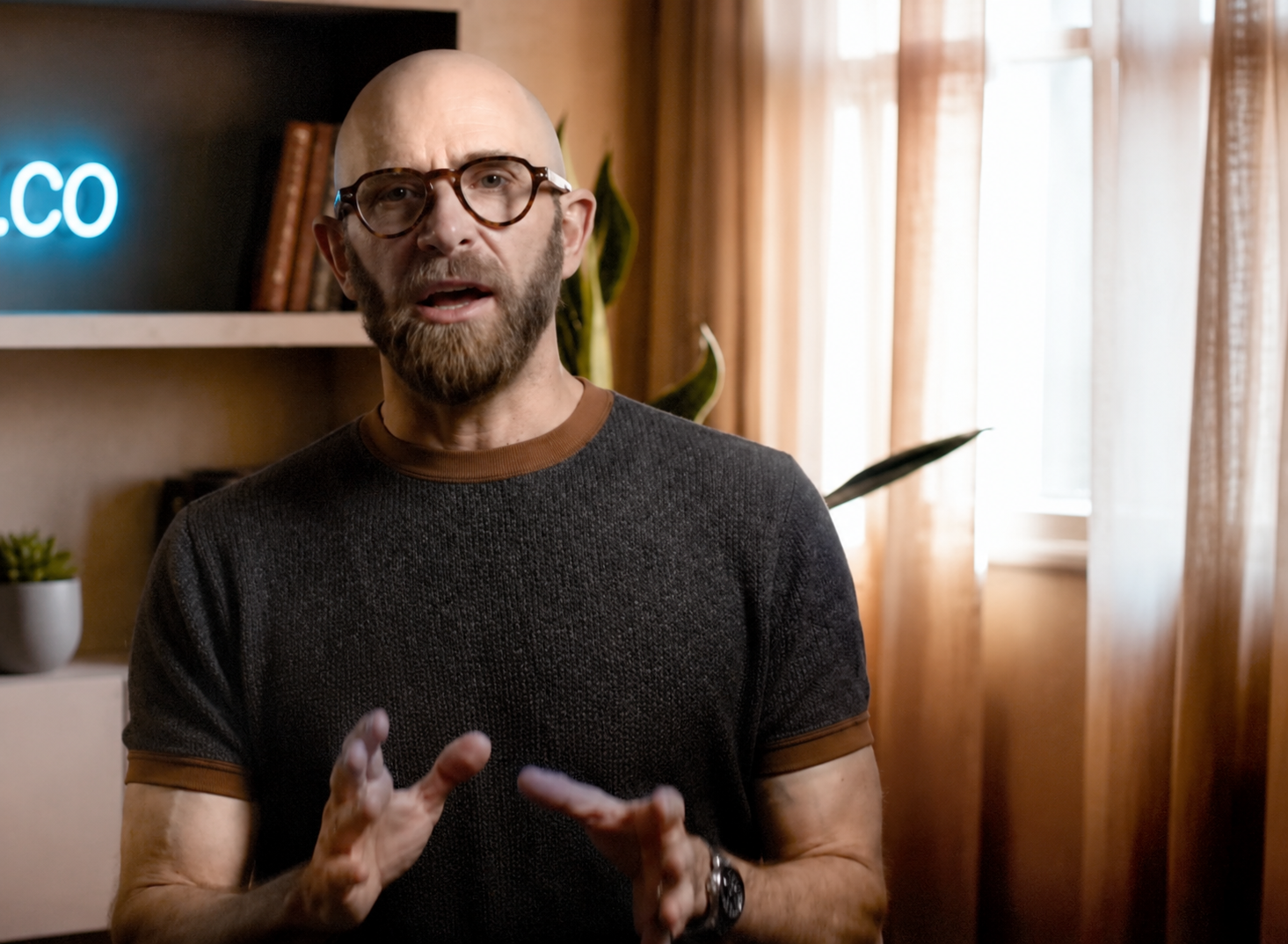
Simon Whistler
Simon Whistler is one of YouTube's most prolific educational creators. HomeFronts is his deep dive into geopolitics, modern conflict, military history, and the civilian and societal dimensions of global events.
Frequently Asked Questions
Why is Marco Rubio considered Trump’s heir apparent in 2026? Rubio has rapidly outmaneuvered Vice President JD Vance by seizing the foreign-policy initiative, winning over the Republican donor class, and earning lavish praise from Trump. Prediction markets, early polling, and key party insiders increasingly point to Rubio as the front-runner to succeed Trump.
What happened to JD Vance’s standing? Vance’s influence diminished sharply in early 2026. He went quiet on social media, faced boos at public appearances, and was sequestered from key decisions because his anti-war, anti-intervention instincts clashed with an aggressive foreign policy targeting Venezuela, Iran, and Cuba.
What roles does Rubio hold in the Trump administration? Rubio serves as Secretary of State, has also been given the role of Acting National Security Adviser, and nominally oversees what remains of the organization formerly known as USAID. Trump has said he is on track to become “the greatest secretary of state in history.”
Why does the donor class prefer Rubio over Vance? The Republican donor class grew discontented with Vance and came to see Rubio as a steadier elder statesman. When Trump polled mega-donors at Mar-a-Lago on whether they preferred Rubio or Vance as his successor, the response broke overwhelmingly in Rubio’s favor.
What is the strategic question dividing the two candidates? Each must decide whether to represent Trump’s cultural MAGA movement or the political legacy of his administration. Rubio can plausibly claim the administration’s record and foreign-policy achievements, while Vance — a former Never-Trumper — struggles to claim either without Trump’s full endorsement.
Why is Iran such a problem for Vance specifically? The conflict with Iran presents Trump with a no-win choice between costly escalation and an empty withdrawal. Vance cannot build a winning legacy on either outcome, and openly criticizing the war would cost him his remaining support among Trump’s base without winning over Democrats.
Is Rubio’s lead guaranteed to hold? No. Trump’s White House is volatile, and Rubio could fall out of favor or commit a blunder. The Republican base might also fail to warm to him once campaigning begins, and challengers from elsewhere in the party could disrupt the field before 2028.
Sources
- The Economist — Marco Rubio: the chameleon in the war room
- The Independent — Marco Rubio, JD Vance and a 2028 presidential run
- ABC News — GOP donors plot shadow draft-Rubio 2028 effort
- WMUR — Rubio-Buttigieg poll, New Hampshire
- The Hill — GOP donor, Rubio, Vance and 2028
- Axios — Vance, Rubio, 2028 and the Trump question
- NBC News — Iran, Marco Rubio, Trump and 2028 succession
- Politico — Marco Rubio, Venezuela and his 2028 future
- The Washington Post — Marco Rubio, Vance and Trump’s heir
- The Globe and Mail — Iran, war, Trump, Vance and Rubio
- Reuters — Trump declines to take sides between Vance and Rubio
- The Hill — Trump, Vance, Rubio and 2028 strategy
- The Nation — Marco Rubio, neocon MAGA


