
Three hundred and eighty million. That is how many lethal doses of fentanyl the Drug Enforcement Administration seized in a single year inside the United States. It is enough to kill every American several times over, and it represents only what authorities managed to catch. The rest moved, as it always does, into the bloodstream of the country.
The poison shows up everywhere, from rural West Virginia to the streets of Kensington in Philadelphia. It cuts across class and geography, hidden in counterfeit pills, laced into cocaine, slipped into both glittering party scenes and dying mill towns. No community is genuinely safe from it.
In the span of two generations, the United States has swung between two extremes. The first was an era of mass incarceration that cost more than a trillion dollars and failed to accomplish nearly everything it set out to do. The second is a more recent posture in which some cities decriminalized drug possession or simply stopped enforcing it, including in public. The results of that second swing speak loudly: stretches of major American cities turned into open-air drug markets marked by rampant homelessness and sexual violence, while synthetic additives made the drugs themselves more addictive and more lethal than anything that came before.
Situation Brief
- Since 1971, the United States has spent more than a trillion dollars enforcing drug policy, yet between 1990 and 2005 cocaine prices fell 71 percent and heroin prices fell more than 80 percent while heroin purity rose from an average of 7 percent to 40 percent.
- Federal drug-control spending grew from just over half a billion dollars in the early 1980s to $34.6 billion by 2020, a 1,090 percent increase even after adjusting for inflation, with state and local costs on top.
- More than one million Americans have died of drug overdoses since 2000, roughly 700,000 of them involving opioids; in 2022 alone, over 106,000 Americans died, nearly double the U.S. death toll of the entire Vietnam War, in a single year.
- Oregon’s Measure 110 decriminalized hard-drug possession in 2021, then was rolled back by a bipartisan vote in 2024 after overdose deaths in the state rose 75 percent between 2020 and 2022, against 18 percent nationally.
- Fentanyl is 50 times stronger than heroin and 100 times stronger than morphine, can be made in a modest lab from precursor chemicals, and has been joined by xylazine, a veterinary sedative that rots human tissue and drives amputations.
How did America swing so far, and now that it is here, what should it do next? The honest answer is that neither pure punishment nor pure permissiveness has worked, and the country’s path forward runs through the difficult middle ground it has so far refused to occupy.
Fifty Years of Failed Enforcement
Richard Nixon famously declared drugs “public enemy number one” on June 17, 1971, marking the start of what became known as the war on drugs. Looking back, the country was not yet in the grip of a massive drug crisis. Addiction was devastating certain areas, but the national picture was comparatively tame, with only an estimated 1.5 percent of Americans reportedly using illegal drugs regularly.
The strategy that followed pursued two straightforward paths. The first was to cut off supply from abroad while cracking down on production at home. The second was to crush demand through harsh punishment for users and dealers alike. The approach won broad bipartisan support.
While it was initially pushed harder by Republicans, Democrats were largely on board, at times even competing to be seen as toughest on drugs. The idea that intercepting supply at the borders, arresting dealers, and locking addicts up could deter use became gospel in Washington for decades.
The Trillion-Dollar Price Tag
The cost was astronomical. Since 1971, America has spent over a trillion dollars enforcing its drug policies, more than the entire annual economic output of nations such as Sweden, Switzerland, and Poland. In the early 1980s, the federal budget for drug-abuse control was just over half a billion dollars. By 2020 that figure had grown to $34.6 billion, a 1,090 percent increase across roughly four decades even after factoring in inflation.
And that is only federal spending. States and local municipalities pour countless billions more each year into enforcement, courts, and incarceration.
The results undercut the entire premise. Between 1990 and 2005, despite the billions spent fighting the war, cocaine prices fell 71 percent while heroin prices fell more than 80 percent. Over the same period, heroin’s average purity climbed from 7 percent to 40 percent. What the government had accomplished was to make drugs more potent, not less available.
Why Enforcement Failed So Completely
Enforcement failed spectacularly for two reasons that policy never reckoned with. The first is that it never understood the causes of the problem it claimed to be solving. Underground smuggling has always been a feature of human societies. Countries are well within their rights to try to curtail it where they can, but interdiction alone was never going to crush domestic demand.
Consider that even the most authoritarian states cannot stop contraband. Despite North Korea’s relentless efforts to keep foreign media out of the world’s most tightly controlled police state, it continues to slip through. And that is smuggling without the engine of physical addiction driving it.
The second flaw was treating addiction as a moral failing that could be punished away. When a person’s brain has been chemically rewired to prioritize drugs above all else, above food, shelter, even their own children, the threat of jail time is not much of a deterrent. The threat simply does not register against the overwhelming biological drive for the next dose. Punishment assumes a rational actor weighing consequences. Severe addiction removes precisely that capacity.
The Prescription Pipeline to the Streets
By the 2000s, a new crisis pushed law enforcement to its limits: prescription opioids. Between 1999 and 2010, prescriptions for opioid painkillers quadrupled. Corporate greed undoubtedly played a role, as large pharmaceutical companies aggressively marketed and profited from these pharmacy-issued drugs. Many were later sued and found liable.
Purdue Pharma, for instance, pushed OxyContin as “virtually non-addictive,” a claim that was, of course, false. The company would later plead guilty to federal charges and pay over $8 billion in penalties.
Yet the full picture demands nuance. Without excusing the industry, this was not a crisis entirely of its own making. Once patients were prescribed these medicines long-term, there was almost no infrastructure, especially early on, to help them taper off, which was nearly always necessary for a safe withdrawal. The companies were not the ones writing the prescriptions either.
That came down to a combination of doctors who profited from issuing them and a broad shift in how physicians were taught to think about pain medicine. With ever-growing numbers of Americans suffering chronic pain, these drugs were hailed in some circles as the humane option. More than 76 billion opioid pills would be prescribed between 2006 and 2012.
When authorities finally caught up and began cracking down around 2010, millions of Americans had become long-term dependent on prescription opioids. Treatment facilities existed, but at a fraction of the needed scale, with capacity for fewer than two million people annually when an estimated 21 million needed help. Even those who could get help often waited through significant delays.
From Pills to Heroin to Fentanyl
Watch on HomeFronts
Watch the full video analysis on the HomeFronts YouTube channel, presented by Simon Whistler.
As many users were cut off from their legal supply, their addiction drove them toward the easiest place to get a fix: the streets, which increasingly meant heroin. Mexican cartels saw the opportunity and seized it. They ramped up heroin production, creating a product cheaper and more available than black-market pills. Between 2010 and 2015, heroin overdose deaths more than tripled across the United States.
The human cost has been catastrophic. More than one million Americans have died of drug overdoses since 2000, with the majority of those deaths, roughly 700,000, involving opioids. In 2022 alone, over 106,000 Americans died of overdoses. That figure is just short of double the number of American servicemembers who died during the entire Vietnam War, repeated every single year.
Even that paled beside what came next with fentanyl. Unlike heroin, which requires substantial land to grow poppies and complex processing, fentanyl can be manufactured in a relatively modest lab with the right chemicals. The cartels recognized this immediately, transforming their business model from agricultural to industrial almost overnight. The economics explain fentanyl’s rise to dominance.
Up to 50 times stronger than heroin and 100 times stronger than morphine, it is also intensely addictive. There is no need for poppy fields, just the right precursor chemicals, many of which flow from Chinese chemical factories to Mexico, where they are processed into fentanyl.
The Cartel as Fortune 500 Company
The modern drug trade should be understood less as a purely criminal enterprise and more like a Fortune 500 company. The shift from plant-based drugs to synthetics represents one of the most significant business innovations in criminal history. In a single recent year, the DEA seized more than 60 million fentanyl-laced fake pills and nearly 8,000 pounds of fentanyl powder.
The supply chain runs with corporate efficiency. Precursor chemicals move through established shipping routes, arriving at Mexican ports such as Lazaro Cardenas and Manzanillo, where cartels have built sophisticated distribution networks. A special U.S. House committee has accused Chinese companies of receiving tax rebates for precursor exports, effectively subsidizing the fentanyl trade with government support.
The math of addiction creates a perverse economic ecosystem from which many industries profit, both legally and illegally. State governments spent a combined $64 billion to lock up over one million people at the end of 2021. The median state spends $64,865 per prisoner annually, with states like Massachusetts reaching an eye-watering $307,468 per person.
Compare that to treatment, where rehab averages around $5,000 and even high-end residential programs rarely exceed $20,000, less than a third of what the country spends warehousing addicts in cages. As for who profits from the misery, the cartels certainly do: Reuters reported in 2018 that the Mexican government believes some of the largest cartels generate over $21 billion each year, and Honduran gangs have made so much from their U.S. operations that remittances home have helped fuel a housing boom.
The Half-Measure Revolution
By the late 2010s, the war on drugs was facing something close to an existential crisis. Decades of enforcement had produced millions of arrests and cost hundreds of billions of dollars, yet delivered no tangible improvement. In fact, the country had never been worse off in terms of addiction or overdose deaths.
The pivot away from traditional enforcement did not happen overnight. It began with pushes from progressive and libertarian activists in the early 2010s and grew mainstream by the end of the decade, driven by a combination of two forces: the realization that the old approach simply was not achieving results, and exhaustion from mass incarceration.
The new approach had a name: harm reduction. Instead of trying to eliminate drug use through punishment, the movement largely aimed to reduce the underground networks addicts had to navigate to get their fix. It was grounded in a “meet them where they’re at” mentality, recognizing that given the millions of Americans already addicted and the fact that treatment would take time, the priority should be providing safer ways for them to continue using.
The philosophy was elegant in its simplicity: acknowledge that abstinence-only approaches had failed catastrophically, accept that some people would keep using regardless of the consequences, at least in the short term, and focus on keeping them alive long enough to eventually seek treatment. Keeping people alive became the immediate priority, set above the still important long-term goal of getting them sober.
Experiments in Reform
American cities and states began experimenting with varying degrees of reform. Seattle’s Law Enforcement Assisted Diversion, or LEAD, program launched in 2011 and overhauled how the city treated drug users. Low-level offenders were handled by case managers rather than sent to jail. Early results looked promising: participants were 60 percent less likely to be arrested again and 39 percent less likely to be charged with a felony than counterparts who served time.
It was also more cost-effective, with LEAD averaging $899 per person per month against $5,299 for incarceration.
That was an early example, and ambitions only grew. Philadelphia opened a supervised injection site in 2019 before federal pressure shut it down. San Francisco followed, opening multiple safe injection sites in 2022. New York City opened the nation’s first officially sanctioned supervised consumption sites in 2021. Denver, Baltimore, and Boston all launched harm-reduction initiatives of their own.
Needle exchange programs were another widely adopted method, allowing addicts to swap used needles for clean ones. The goals were to reduce needle waste, long an issue in American cities, and to curb the diseases spread by shared needles. By 2020, over 300 programs operated nationwide. Results were mixed from the start.
HIV transmission rates dropped significantly as access to clean needles nearly eliminated reuse. But cities like San Francisco and Portland developed chronic problems with discarded needles littering the streets, which are more than eyesores; they are genuine health hazards.
Oregon’s Measure 110 and the Decriminalization Disaster
The most ambitious approaches surfaced around 2020, when entire states moved to decriminalize personal drug possession. Many states had done this for marijuana, but extending it to hard drugs such as heroin was unprecedented in the United States. Oregon went first, with 58 percent of voters greenlighting Measure 110, a statewide referendum that decriminalized possession of small quantities of recreational drugs.
From the outset, the idea was hobbled by poor execution. Oregon at the time had only 16 residential treatment beds per 100,000 residents, far below the national average of 37. Wait times for treatment regularly exceeded 60 days. Nevertheless, the voters had spoken, and decriminalization took effect in February 2021.
To put it plainly, the results were a disaster. A key part of the model was that police would issue $100 citations to people seen using, citations that could be waived by calling a treatment hotline. Of the 16,000 citations issued in the first year, only 1 percent of recipients called the hotline. The rest ignored the citations entirely and faced no consequences.
Without any mechanism to create pressure for behavioral change, decriminalization became a free pass to keep using. Critics argued it created a pull factor, drawing drug users from other states where the same behavior still meant jail time. Advocates reject that argument, but addicts are not stupid: if they risk jail buying drugs in one state but can do so freely in the next, many will simply relocate.
When Cities Became Open-Air Markets
Portland was among the hardest hit. Much of its downtown transformed into an open-air drug market. Blocks of city streets became lined with tents where people openly injected drugs, bought and sold substances in plain view, and camped indefinitely. News coverage regularly showed dozens of people using on sidewalks at once, discarded needles scattering the ground and makeshift shelters blocking storefronts.
What had once been a thriving city and tourist destination turned into something residents described as “apocalyptic.” Without any deterrent to public use, addicts regularly used in the open, both smoking and injecting. Businesses left in droves as shoplifting became rampant. Target closed three stores.
REI shuttered its final city location after spending $800,000 on security. Nike permanently closed its Northeast Portland community store after the city could not muster the police protection needed to keep it functional.
Public opinion turned sharply. Recent polling found that 87 percent of people with drug experience believe public drug use should be prohibited, while 62 percent believe Measure 110 made overdoses worse. The statistics backed the perception: Oregon’s overdose deaths rose 75 percent between 2020 and 2022, against just 18 percent nationally. By early 2024, state lawmakers voted in a bipartisan move to recriminalize possession.
Democratic Governor Tina Kotek signed the bill into law less than four years after Measure 110 took effect, with recriminalization taking hold in September.
But the damage was done. The government had set the standard that public use was acceptable for years, and the message was heard clearly. You cannot simply flip that switch back and rewrite the social norms overnight. Unless users volunteer for treatment, police are left stuck between the old approach of jail and allowing the behavior to continue.
Portland Police Chief Chuck Lovell captured the bind: officers support connecting users to services, but they need the resources and tools to address the public-safety impacts of open drug use.
The Pattern Repeats: California and San Francisco
Similar patterns emerged across the country. California’s Proposition 47, a statewide referendum that reduced drug possession and several other crimes from felonies to misdemeanors, faced almost immediate backlash as retail theft and open drug use climbed dramatically. San Francisco, despite its supervised consumption site, saw overdose deaths reach 806 in 2023, the highest on record, even as authorities insisted they were doing all they could.
The contradiction became a public-relations embarrassment in November 2023. In preparation for Chinese leader Xi Jinping’s visit, the city suddenly found the resources to launch a massive cleanup, which lasted about as long as the visit itself. The episode laid bare an uncomfortable truth: the squalor was not inevitable. It was tolerated until a foreign dignitary made it inconvenient.
What Portugal and Lisbon Got Right
So why did America fail where others succeeded? Advocates who cited Portugal and Switzerland were not inventing their numbers. The difference is that Lisbon implemented something fundamentally different from what American cities attempted. Portugal did not just decriminalize. It built an entire ecosystem of support, and crucially, it built that network in advance of rolling out decriminalization.
When someone in Portugal was caught using drugs, they faced a “dissuasion commission” of medical professionals, social workers, and legal experts who could mandate treatment. They had immediate access to treatment beds, job training, and housing support. They maintained consequences for public use and dealing. The streets of Lisbon were never open-air drug markets.
The Portuguese approach understood that addiction was fundamentally a health problem and built systems to address those root causes, an understanding that has yet to take hold across much of the United States.
The Uncomfortable Truths About Modern Addiction
Walk through San Francisco’s Tenderloin, downtown Portland, or visit places like Huntington, West Virginia, and you will witness scenes that challenge the comfortable narratives many embrace about drug reform, especially in America, where personal freedom is often championed as the ultimate good.
Modern synthetic drugs have fundamentally transformed what addiction looks like. Fentanyl is not simply another opioid. It is 50 to 100 times more potent than morphine. These are not the drugs of the past, and neither are the addictions they cause.
As destructive as heroin can be, fentanyl is orders of magnitude worse. Users describe needing to dose every few hours just to avoid a withdrawal so severe it feels like “bones breaking and the skin’s on fire.” The drug hijacks the brain so completely that users report losing the ability to feel any emotion except the need for the next dose.
The crisis has taken a particularly horrifying turn with the emergence of xylazine, a veterinary sedative known on the streets as “tranq.” This drug is not even an opioid but a sedative designed for animals, and it has begun contaminating the fentanyl supply across America. Contamination rates spread unevenly: while the national average sits at 16 percent of drug samples testing positive for xylazine, the picture on the ground varies drastically. New York state shows 37 percent contamination.
Some Ohio counties report rates reaching into the 70s. Philadelphia’s Kensington neighborhood has become a ground zero, with tranq contaminating up to 91 percent of the street fentanyl supply.
The Zombie Drug and a Medical System Overwhelmed
What makes xylazine so alarming is what it does to the human body, which it was never designed to enter. It causes horrifying damage to skin tissue, creating deep, rotting wounds that refuse to heal even with medical treatment. These severe wounds do not affect every user, even in areas where xylazine contaminates over 90 percent of the supply, but they strike a substantial minority.
For those living on the streets, where access to healthcare is already limited and comes with the guarantee of a forced, cold-turkey withdrawal, the wounds progress relentlessly. Users develop rotting abscesses that eat away at their flesh. If not treated immediately, the wounds widen and spread. After a relatively short period, when the damage becomes too severe, amputation is the only option.
The medical system is struggling to keep pace. Emergency rooms that once treated standard abscesses now require specialized wound-care protocols. Dr. Samir Mehta, an orthopedic trauma surgeon profiled in the Wall Street Journal, spent years occupied with serious limb injuries from car crashes and other blunt-force trauma.
Now he is consulted nightly about xylazine wounds, which by the time the patient comes in, often because they fear the withdrawal that treatment brings, have rendered limbs unrecognizable. Chronic tranq use also causes severe nerve damage, leaving addicts physically unable to stand upright, reduced to limping half-slouched through the streets. That image gave rise to the disturbing “zombie drug” nickname. When observers say these users are literally decomposing while still alive, it is not hyperbole.
Why This Is Neither Freedom Nor Compassion
This is not freedom, nor is it humane. Recognizing addiction’s devastating impact does not mean returning to the failed war on drugs. But the country has swung so far in the opposite direction that it now enables slow-motion suicide in public spaces, calling it compassion while stepping over bodies on the sidewalk and teaching children how to dodge used needles on the walk to the park.
Our societies function on the expectation that people will generally act in their own best interest. You work because you need to earn a living. That premise is the foundation on which freedom and individual autonomy rest. Severe addiction upends it.
Neuroscience is unambiguous: the drug causes profound changes in the prefrontal cortex, the region responsible for judgment, planning, and impulse control. It hijacks the reward system so thoroughly that the drive for drugs overrides everything else, even basic survival. Forced to choose between food and the drug, the user chooses the drug. Required to take a life-threatening risk to get it, they will.
Dr. Nora Volkow, director of the National Institute on Drug Abuse, makes it plain: “The addicted brain is distinctly different from the non-addicted brain. Judgement, decision making, learning and memory, and behavior control are all affected.” Expecting someone in late-stage addiction, who given recent overdose trends may be dead within weeks or even days, to make rational choices about treatment is like expecting someone with advanced Alzheimer’s to manage their own medical care.
It creates an impossible paradox: the people who most need help are least capable of seeking it.
Recovery Is Possible, But Capacity Falls Short
There are success stories that prove recovery is possible, even from the depths of fentanyl addiction. Medication-assisted treatment shows remarkable effectiveness, with studies indicating a 50 percent reduction in overdose deaths for those who stay in the program, though it remains controversial because people can become dependent on the medication used to ease them off fentanyl. That is not a reason to abandon it, only a call for a more organized, structured approach.
Emergency department-initiated buprenorphine treatment has shown particular promise, catching people at their most vulnerable moments and transitioning them directly into care. But only about 25 percent of people who need these treatments actually receive them.
Credit is due where it is earned. For those already addicted, harm reduction methods do help. Addicts are less likely to overdose in supervised areas, less likely to use dirty needles that spread blood-borne disease, and more likely to contact authorities during a suspected overdose without fearing jail, a real concern in areas with more old-fashioned approaches.
Yet the harm-reduction movement has, in too many places, stopped there. The country has become expert at managing addiction, making it slightly cleaner and slightly safer to use some of the most dangerous drugs on earth. It is keeping people alive in their misery. Overdose deaths are finally trending downward, falling from over 110,000 in 2022 to roughly 80,000 in 2024 by preliminary CDC data, but addiction rates remain stubbornly high.
An estimated 2.5 million Americans still struggle with opioid use disorder. We are keeping more people alive but failing to get them out of addiction. Despite everything, drug overdoses remain the leading cause of death for Americans aged 18 to 44, more than car accidents, gun violence, or any disease.
One of the hardest truths to absorb is that only 42 percent of people with severe addiction express any desire to quit at any given moment. You can build the treatment system, but you cannot make them come, because their brains have been rewired to prioritize the drug above family, health, and life itself. Waiting for people to “hit rock bottom” and seek help voluntarily means watching many die first.
Finding a Path Forward
There is no clean, decisive set of actions that magically solves this crisis, and honesty requires admitting as much. What can be done is to analyze what has been tried, what has worked, what could work, and what plainly has not.
For starters, America has to abandon the idea that it must choose between compassion and accountability. It is not a binary, and a healthy combination of the two is long overdue. Portugal and Switzerland both faced their own opioid crises within living memory and made dramatic improvements.
Their successes share common elements: immediate access to treatment, mandatory assessment mechanisms, integrated services addressing housing and employment, and continued investment. They treat addiction as a chronic medical condition requiring long-term management, not a moral failing, and also not something to enable and turn a blind eye toward. The most successful policies combine two elements American cities have consistently avoided together: accessible treatment and oversight.
The Swiss Model and the Statistic Worth Remembering
Some jurisdictions have considered so-called “safe supply” programs, providing pharmaceutical-grade opioids to users. To be clear, there is no safe way to use fentanyl. But pharmaceutical opioids eliminate the tissue-destroying effects of tranq and the Russian roulette that modern American street drugs have become due to extreme amounts of additives.
Switzerland pursued what amounts to the world’s most comprehensive safe-supply program, providing pharmaceutical-grade heroin to 1,500 severely addicted users who did not succeed with more traditional approaches like methadone. People are not granted access immediately. They must have attempted and failed at least two previous methods before becoming eligible. This is not a system where someone walks in off the street and buys heroin.
The results are striking. By maintaining strict eligibility standards and encouraging treatment first, Switzerland claims that 75 percent of all active drug users are in treatment on any given day, a stunning differential from American numbers. Meanwhile, the total number of users has collapsed. Between 1990 and 2022, the number of new heroin users in Switzerland dropped by 95 percent, from roughly 3,000 per year to fewer than 150. That is the statistic to take away.
This model, combined with a return to enforcement that public drug use will not be tolerated, would resolve significant problems for both addicts and surrounding communities. There would be no xylazine in the product, period. But implementing such programs requires political courage and some bipartisan buy-in.
It will absolutely require getting people off the streets, with large infrastructure investments to move people into some form of housing, even if temporary. Harm-reduction activists cannot ignore the genuine impact this lawlessness has had on the communities that adopted it and on those simply trying to live their lives.
America at a Crossroads
In 2025, America stands at a crossroads. The prohibition-and-incarceration method alone does not work. In fact, it made things worse. The war on drugs never understood the nature of addiction and instead treated it as a moral failing to be punished into sobriety. America was right to push for reform.
But just as the country had to wake up to the failure of the old approach, it must now come to terms with the fact that the current one has not addressed the crisis either. The half-measure revolution, harm reduction as a goal in and of itself, has kept more people alive, yet left them prisoner to ongoing addiction.
The path forward is full of hard choices, and there is no silver bullet. It requires building enough treatment capacity to actually meet demand, not just talk about it. It means creating systems that can intervene when addiction has destroyed or severely depleted a person’s capacity for self-care. Most of all, it means acknowledging that neither pure punishment nor pure anarchy will solve this crisis.
It is long past time that America asked the hard questions about an issue that has taken so many lives and shattered countless more. The country spent fifty years learning that you cannot arrest your way out of a public health crisis. The question now is whether it will take another fifty to learn that anarchy is no solution either.
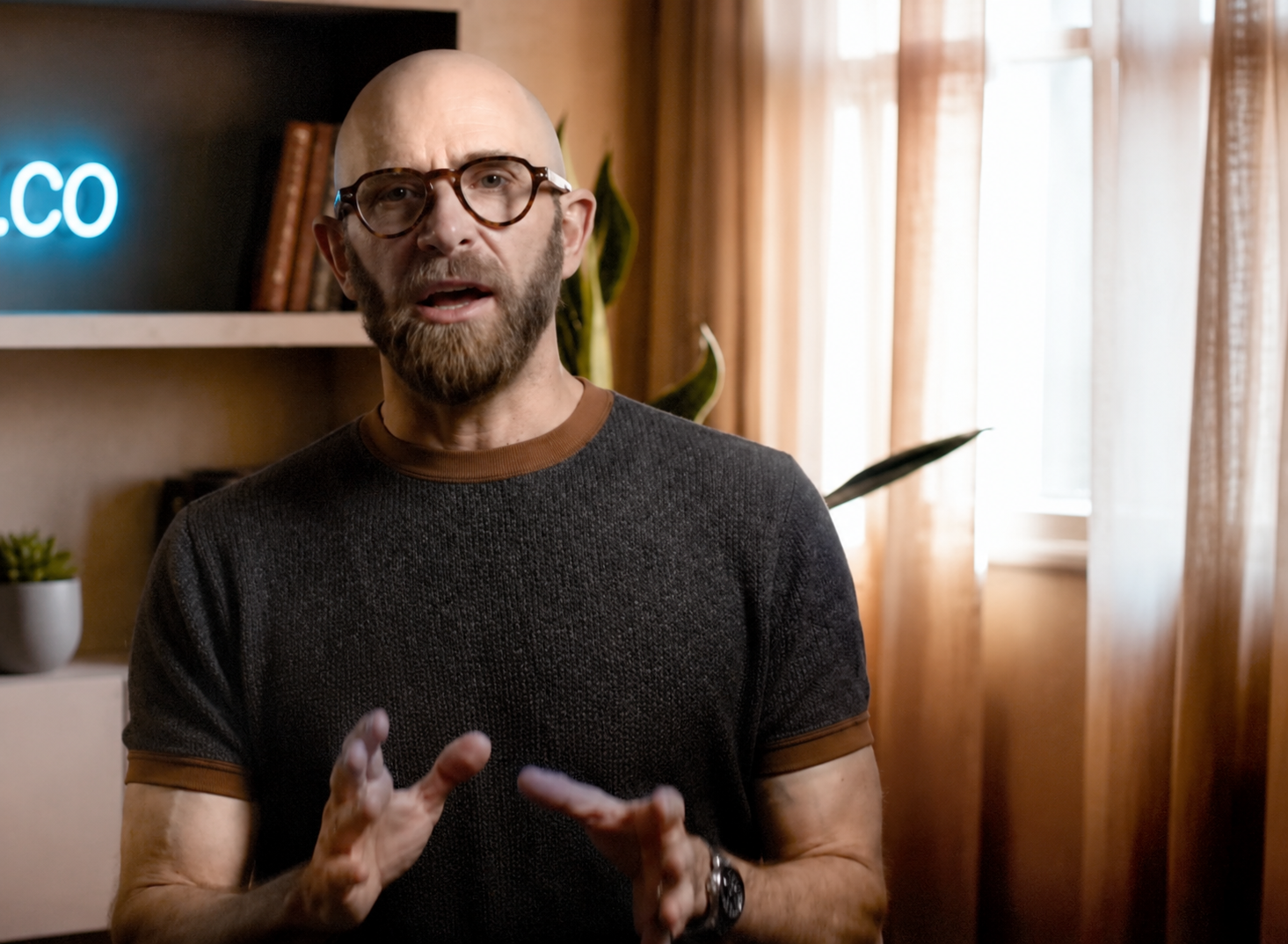
Simon Whistler
Simon Whistler is one of YouTube's most prolific educational creators. HomeFronts is his deep dive into geopolitics, modern conflict, military history, and the civilian and societal dimensions of global events.
Frequently Asked Questions
How much has the United States spent on the war on drugs, and what did it achieve?
Since 1971, America has spent over a trillion dollars enforcing its drug policies, more than the annual economic output of nations such as Sweden, Switzerland, and Poland. Federal drug-control spending alone grew from just over half a billion dollars in the early 1980s to $34.6 billion by 2020, a 1,090 percent increase even after inflation, with state and local costs on top. Yet between 1990 and 2005, cocaine prices fell 71 percent and heroin prices fell more than 80 percent, while heroin’s purity rose from 7 percent to 40 percent. Enforcement made drugs more potent, not less available.
Why is fentanyl so much more dangerous than earlier drugs like heroin?
Fentanyl is up to 50 times stronger than heroin and 100 times stronger than morphine, and it is intensely addictive. Unlike heroin, it requires no poppy fields, only precursor chemicals, many flowing from Chinese factories to Mexico for processing. That makes it cheaper and easier to mass-produce. Users describe needing to dose every few hours to avoid a withdrawal that feels like “bones breaking and the skin’s on fire,” and report losing the ability to feel any emotion except the need for the next dose.
What is xylazine, or “tranq,” and why does it cause amputations?
Xylazine is a veterinary sedative, not an opioid, that has begun contaminating the fentanyl supply. It causes deep, rotting wounds that refuse to heal even with treatment. Left untreated, these abscesses widen and spread until amputation becomes the only option. Chronic use also causes severe nerve damage that leaves users unable to stand upright.
Contamination is uneven: the national average is 16 percent of samples, but New York state shows 37 percent, some Ohio counties reach into the 70s, and Philadelphia’s Kensington neighborhood reaches up to 91 percent.
What happened with Oregon’s Measure 110?
Approved by 58 percent of voters, Measure 110 decriminalized possession of small quantities of hard drugs and took effect in February 2021. But Oregon had only 16 treatment beds per 100,000 residents, far below the national average of 37, and the $100 citations meant to steer users to a hotline were ignored by 99 percent of recipients. Overdose deaths rose 75 percent between 2020 and 2022, against 18 percent nationally, and downtown Portland became an open-air drug market. Lawmakers recriminalized possession in a bipartisan 2024 vote, with the change taking effect that September.
Why did decriminalization work in Portugal but not in the United States?
Portugal did not simply decriminalize. It built an entire support ecosystem in advance, before rolling out the policy. People caught using faced a “dissuasion commission” of medical, social, and legal experts who could mandate treatment, and they had immediate access to treatment beds, job training, and housing support. Portugal also maintained consequences for public use and dealing, so its streets never became open-air drug markets.
American cities removed penalties without first building the treatment and oversight infrastructure to back them up.
Does harm reduction help at all?
Yes, for people who are already addicted. Harm-reduction methods make users less likely to overdose, less likely to use dirty needles that spread disease, and more likely to call for help during an overdose without fearing arrest. Medication-assisted treatment can cut overdose deaths by 50 percent for those who stay in the program. The shortfall is reach and follow-through: only about 25 percent of people who need such treatments receive them, and the movement has often stopped at keeping people alive rather than helping them recover.
Are overdose deaths finally falling?
Overdose deaths are trending downward, from over 110,000 in 2022 to roughly 80,000 in 2024 according to preliminary CDC data. But addiction rates remain stubbornly high, with an estimated 2.5 million Americans still living with opioid use disorder. Drug overdoses remain the leading cause of death for Americans aged 18 to 44, ahead of car accidents, gun violence, and any disease. The country is keeping more people alive while still failing to get them out of addiction.
Sources
- Wall Street Journal: Tranq Turns More Illicit Drug Users Into Amputees
- New York State Department of Health publication
- North Carolina Health News: Switzerland Fights Heroin With Heroin
- The Conversation: Philly Hospitals Test New Strategy for Tranq-Dope Withdrawal
- CNBC: The US Has Spent Over a Trillion Dollars Fighting the War on Drugs
- RAND Corporation press release
- Council on Foreign Relations: What Is China’s Role in Combating the Illegal Fentanyl Trade?
- CDC: What You Should Know About Xylazine
- AP News: China, Fentanyl, and the Congressional Committee
- Reuters: US Committee Finds China Is Subsidizing American Fentanyl Crisis
- Oregon Business: REI Announces Closure of Portland Store
- CDC MMWR Volume 73


