

“When Your Son Goes MAGA.” That headline, which ran in the New York Times in the early days of 2025, would have read as a fringe oddity just a few years earlier — a strange outlier worth a raised eyebrow and little more. For decades, the cultural current ran in the opposite direction. Especially in the United States, it was conservative parents who fretted that their children would return from college questioning their faith, rejecting their values, and voting for the other side.
Today, that pattern has all but reversed. Donald Trump carried young men in the 2024 election by 16 points — the strongest Republican showing among young voters in generations. Kamala Harris still won a majority of young women, but even there Trump made inroads. Across the Atlantic, the story rhymes: far-right parties are now resonating with younger Europeans in ways that would have been dismissed as impossible a decade ago.
The shift has become common enough that mainstream outlets are publishing “how-to” guides for liberal parents trying to understand their MAGA sons.
Situation Brief
- Trump won young men in 2024 by 16 points (56 percent to 42 percent), his party’s strongest performance with voters under 30 since 2008, while also gaining ground with young women even as most still backed Harris.
- The rightward drift is not uniquely American. In France, the National Rally surged to 32 percent among 18-to-33-year-olds by 2024; in Germany, the Greens collapsed among young voters as the AfD nearly tripled its youth share.
- Climate, once the dominant cause of young activists, has been displaced by immigration and the cost of living as the issues young people now rank as most urgent.
- Economically, this generation leans left in instinct — favorability toward capitalism among 18-to-34-year-olds has swung sharply negative — yet many are moving right because they feel the right is the side actually talking to them about their pain.
- A “meaning vacuum” has opened: religious belief is rising among the young in the UK and US, with Catholicism and Islam growing fastest, reversing decades of secularization.
Something fundamental has changed. The generation widely expected to be the most progressive in modern history is becoming something else entirely — and, remarkably, the people who spent the most time with them seem to have missed it coming. This is the story of how a youthful rightward turn took root across very different countries at once, and why economics, culture, and a deeper hunger for meaning all point in the same direction: a generation that was promised the world, built its life around that promise, and is now looking elsewhere for answers.
A Rightward Shift Few Predicted
For decades, pollsters and strategists built their models on a confident assumption: each new cohort of young people would prove steadily more progressive than the last — inclusive, welcoming, and demanding action on issues like climate change. The 2024 presidential election broke that model in two.
Young voters had leaned reliably left for years. The standing worries were that they might be too left-wing, and that they did not turn out dependably. As recently as 2020, they were predictable Democratic voters — Joe Biden, hardly a figure of youthful energy, carried them by double digits.
But the warning lights had been flashing before 2024. Surveys showed young voters, and young men in particular, edging closer to Trump, a drift that accelerated after he picked JD Vance as his running mate and offered a different flavor of Republicanism. When the votes were counted, Trump had won young men outright, 56 percent to 42 percent by exit-poll estimates — and posted the largest share of under-30 voters of any Republican since 2008.
The Pattern Crosses the Atlantic
What happened in America was not an accident of its peculiar electoral system. The same realignment is visible across much of Europe, and the fact that it surfaces under such different political, economic, and cultural conditions suggests something deeper is at work.
Consider France. In the 2022 presidential election, 26 percent of 18-to-24-year-olds backed explicitly far-right candidates, and Emmanuel Macron — who long sold himself as the energetic, centrist face of young France — trailed both the far right and the far left among the voters who were supposed to be his base. By the 2024 European elections, the National Rally alone commanded 32 percent support among 18-to-33-year-olds, a double-digit jump over five years.
It is true that all left-wing votes combined still outnumber the National Rally among these voters. But that “still” is doing heavy lifting. Marine Le Pen’s party has made genuine inroads with young French voters that would have been unthinkable a decade ago — and the arithmetic only holds by counting the supporters of Jean-Luc Mélenchon’s far-left movement, an outfit that loathes Macron nearly as much as Le Pen’s voters do.
Germany and the Collapse of the Greens
Germany tells an even starker story. Through the 2010s, the Greens became the de facto party of politically active young Germans — anxious about the future and demanding action on threats like climate change. Today, the share of young Germans who rank those issues as paramount has collapsed into the low teens, displaced almost overnight by worries about economics, crime, and immigration.
The Greens have cratered alongside it. In the 2024 European Parliament elections they took just 11 percent of young voters — down 23 points. Meanwhile the far-right Alternative for Germany surged into a tie for first place, nearly tripling its share of the youth vote. Asked what drives them, these voters repeat the same refrains: the cost of living has outpaced wages, housing keeps slipping out of reach, and the sense of rising crime has reordered their priorities.
The Green collapse deserves attention because it reveals a shift in priorities that runs well beyond any one party. Climate action dominated activism across Europe and the United States through the 2010s — Greta Thunberg was named Time’s Person of the Year in 2019 at just 16, and even secured a meeting with Canada’s Justin Trudeau to tell him he was not doing enough.
Watch on HomeFronts
Watch the full video analysis on the HomeFronts YouTube channel, presented by Simon Whistler.
By the end of 2025, the issue is a shadow of itself. The share of Germans rating environmental and climate protection as “very important” has fallen by double digits in five years, and the drop is sharper still among the young. When researchers asked Germans aged 14 to 29 about their chief concerns in 2024, 41 percent named immigration and the cost of living. The point is not that young people stopped caring about the planet, but that more immediate, tangible worries seized the spotlight — and the parties speaking most aggressively about them are not on the left.
The Cultural Terrain Gen Z Inherited
There is an African proverb worth holding onto here: “A child who is not embraced by the village will burn it down to feel its warmth.” It captures the cultural ground Gen Z walked onto. The oldest members came of age during the late Obama years, a moment that felt like the culmination of decades of social progressivism. Marriage equality went from facing broad, bipartisan opposition when Barack Obama was elected in 2008 to being legal and commanding majority support by the time he left office.
The Democrats nominated their first female presidential candidate, who framed her run as a chance to crack “that highest, hardest glass ceiling.” The arc of history, it seemed, was bending one way.
By the mid-2010s, American progressivism had won its major battles, and won them decisively. What followed may be remembered by historians as the left falling victim to its own success. Fresh off those victories, and emboldened, activists pushed into far more contested terrain — and often did so with a moral certainty that dismissed, or tried to silence, anyone not fully in step.
When the Center Became Radioactive
A short test illustrates how fast the ground moved. Consider this passage: “After years of neglect, this administration has taken a strong stand to stiffen the protection of our borders. We are increasing border controls by 50 percent. We are increasing inspections to prevent the hiring of illegal immigrants. And tonight, I announce I will sign an executive order to deny federal contracts to businesses that hire illegal immigrants.”
It sounds as if it could have come from Trump. It did not. Those words belong to President Bill Clinton, from his 1996 State of the Union, and they drew bipartisan applause. He was no outlier. In 2005, Senator Obama said the country “simply cannot allow people to pour into the United States undetected, undocumented, unchecked,” and warned that an influx of “mostly low-skill workers” threatened “to depress further the wages of blue-collar Americans.”
Within a decade or two, positions like those went from mainstream center-left to essentially radioactive. By 2024, merely using the word “illegal” landed the staunchly pro-migration Biden in trouble with the left; The Guardian called it “dehumanizing, inaccurate, and outdated,” and he walked it back, saying he regretted the term. The shift was not confined to immigration. Once-marginal positions on gender and identity hardened into orthodoxy, seemingly with little regard for where public opinion stood — and dissent began to carry professional and social costs.
The Cost of Saying the Wrong Thing
The evidence that young people felt boxed in is striking. By 2021, 65 percent of college students said the campus climate kept people from saying things others might find offensive — a figure that ran higher still at elite institutions. Between 2023 and 2025, Northwestern University researchers conducted nearly 1,500 confidential interviews with undergraduates. Asked whether they had pretended to hold more progressive views than they actually believed in order to get ahead academically or professionally, 88 percent said yes.
This would land differently if those students had arrived already holding hard-right views. In many cases they had not. They were often centrists or mild progressives who nonetheless felt unable to voice opinions that, a few decades earlier, had been understood as reasonable — opinions even Democratic politicians once held.
The dynamic went supernova with one of the most divisive issues of recent years: the war in Gaza. Beginning in April 2024, pro-Palestinian protests spread from Columbia to dozens of prestigious campuses. Demonstrators occupied and barricaded buildings, demanding their universities divest from Israel. As tensions rose, several schools switched to remote classes and partially closed; Columbia canceled its graduation ceremonies entirely, and to many it felt as if institutions were losing control.
For the seniors of 2024, the disruption was especially cruel. They had been the high school class of 2020, who lost their proms and graduations to Covid — and then lost a second graduation to the radicalism of a small share of classmates. Into that void stepped conservatives with a message of order: Texas Governor Greg Abbott sent state troopers to clear the encampment at UT Austin within days, and other Republicans pressed to restore calm on campus. The irony is sharp.
Gen Z should be a natural constituency for the left — yet here we are. But culture is only half the story.
The Economic Foundation
On paper, this generation has every reason to be the most left-leaning in modern history. Its members are the most burdened by student debt and the rising cost of living. Fittingly, Gallup polling shows that net favorability toward capitalism among Americans aged 18 to 34 has swung from positive by 46 points to negative by 11 over the last 15 years.
Economic progressivism has indeed found real buy-in with this group, evident in the durable support enjoyed by figures like Bernie Sanders and, more recently, the rise of Zohran Mamdani in New York. These frustrations are not new — they have been building for well over a decade. Sanders’s rockstar standing dates to his 2016 run, when he crushed Hillary Clinton among young voters, winning the under-30 vote in Iowa by 84 to 14. The field was larger in 2020, but he again performed exceptionally well with the young.
His message clearly resonated.
And here it gets strange. Nothing suggests young people are embracing the ultra-free-market conservatism of earlier generations — quite the opposite. They appear to be drifting right out of disapproval of current center-left politicians, whom they see as out of touch and ineffective, in spite of the traditional economic policies of the right, not because of them.
A Script That Stopped Paying Off
The frustration runs deeper than any single administration; in America especially, it has been generations in the making. Young Americans are taught a clear formula for success: stay in school, earn a degree, work hard, and prosperity will follow. Gen Z followed that script to the letter, taking on unprecedented student debt — reassured that it was “good debt.” The average borrower now graduates owing around $40,000, and six figures has become routine for graduate degrees.
The national total has ballooned to nearly $1.7 trillion, exceeding both outstanding credit-card and auto-loan debt.
And what did they get for it? Not what was promised. The average age of all US homeowners is now 59, and even first-time buyers are around 40. Baby Boomers, now between 61 and 79, account for nearly half of all purchases.
Homeownership increasingly looks less like an achievable goal for young workers and more like a retirement milestone. Renting offers little relief either: the share of young adults living with their parents has climbed to levels not seen since the Great Depression, with over half of 18-to-29-year-olds back in their childhood homes.
Young people have not been this locked out of the system they grew up in for decades. So why, feeling that, have they not simply run to the left?
Why the Right Got the Hearing
The answer is that one side actually spoke to them about it. The right tied economic pain to tangible, visible causes, while the Biden administration was branding its record “Bidenomics” in the wake of the worst inflation in decades. Trump, by contrast, talked endlessly about inflation on the trail, later attributing his win to the border and grocery prices. Whether his solutions would genuinely help people mattered less, given how tone-deaf the incumbent’s messaging felt.
The pattern held across Europe. In Germany, the AfD tied economic anxiety directly to refugee policy while the governing coalition poured effort into climate commitments that did little for the daily squeeze. In France, the National Rally campaigned relentlessly on the cost of living alongside immigration, as Macron’s centrists seemed ever more remote from ordinary life.
The populist right was not the only beneficiary. Sanders and Mamdani in the US, Mélenchon in France, Die Linke in Germany, and Zack Polanski in the UK all drew strength from the collapse of the center. The populist left got a real bump. But for whatever reason, it was not as large as the one on the right. As to why — there are a few theories.
The Meaning Vacuum
So Gen Z was dealt a rough economic hand and came of age in an environment where its loudest peers would ostracize anyone who failed to hold the “correct” opinions. To be clear, most young people were never part of that vocal, enforcing minority — many were not political at all. But until recently, it genuinely felt that if you were young and did not hold socially left-wing views on issues like immigration and trans rights, you risked being demonized. Little wonder that many felt pushed away by what they saw as “the left.”
And for some, that push carried them to unexpected places.
For more than half a century, especially in the United States and Western Europe, each generation has been less religious than the one before. By the turn of the millennium, the assumption was that as science and technology advanced, faith would simply fade — a relic of a less enlightened age. To court a younger, more socially liberal generation, Protestant churches across the US and Europe softened long-held doctrines on divorce, same-sex marriage, and immigration. It may have slowed the bleeding, but it did not catch on; by the late 2010s, attendance neared record lows and the religiously unaffiliated — the “nones” — neared record highs.
A Religious Revival Among the Young
Lately, that trend appears to be reversing. In 2021, belief in God among 18-to-24-year-olds in the United Kingdom sat at 16 percent. A year later it ticked up to 19 percent. By late 2025 it had surged to 37 percent, with one survey putting it as high as 45 percent — a staggering turnaround in four years, from under two in ten to nearly half.
More surprising is the denomination drawing them. It is largely not the Church of England seeing the growth, but Catholicism — the church that did not change its doctrines on women’s ordination, same-sex marriage, or much else. Among UK Gen Zers, Catholics now reportedly outnumber Anglicans by two to one, according to surveys based on YouGov data.
A similar pattern is emerging in the United States, where for the first time in decades more people are joining the church than leaving, with some parishes reporting conversion increases of 70 to 80 percent over a few years ago. Many converts come from unexpected places — former agnostics and even committed atheists. Kiegan Lenihan, a 28-year-old convert who moved from the atheism of Christopher Hitchens to the church, put it bluntly: “My generation is watching things fall apart… things all seem to be going wrong in greater society.” Outlets like The Free Press now run headlines asking “How Catholicism Got Cool” and wondering whether American cities are seeing a religious revival — driven by young adherents and converts, not older returnees.
The Pattern Across Faiths
This is not universal. The US and UK are frontrunners; secularization still dominates among the young across much of Western Europe. But where institutions are growing, the pattern is revealing — and it appears across faiths. Among Muslims in Western Europe, populations have grown for decades through immigration and higher birth rates, but the more telling dynamic is generational: research in France and the UK finds young Muslims are more practicing than their parents, defying the theory that future generations would drift from faith.
Israel offers the most dramatic electoral example. There, 73 percent of Jews aged 15 to 24 now identify as right-wing, against just 46 percent of those over 65 — and not merely on nationalism; they are also more socially conservative. A higher ultra-Orthodox birth rate explains part of it, but only part. For more Israelis, the country’s older leftist history is just that: history.
The Israeli case is instructive precisely because it has played out so visibly. A genuine rise of right-wing extremism, once classified as religious terrorism, now sits in government. Meanwhile the Israeli Labor Party — the founding party of the state — clings to just four seats and has had to merge with another left-wing party to survive. As the older secular left has shrunk, appeals to tradition, religion, and nationalism have filled the space. And some of what fills that space is far from benign.
Red Alert: Who Else Fills the Vacuum
When a vacuum opens, someone steps in. The only question is who — and beyond the cases above, some of the alternatives are alarming. In Scotland, a 17-year-old was arrested while planning a mass shooting at a local mosque. Radicalized online by the far right since age 13, he had come to believe whites were in a race war and “developed sympathies” for the Nazi Party; he even feigned interest in converting to Islam to gain access to the building.
In England, a 15-year-old named Rhianan Rudd was groomed online into neo-Nazism, built a shrine to Hitler in her bedroom, and ultimately took her own life.
These are extreme cases, but they mark the far end of a spectrum that has grown more popular than most realize. Further along it sits Nick Fuentes, who has built a real political movement out of similar disaffection without the open calls to violence. Fuentes leads what he calls the “groyper” movement, with a following in the millions of young men, and has openly praised both Adolf Hitler and Joseph Stalin.
When Bans Stop Working
Fuentes’s recent rise is especially troubling. For a time, many believed that banning him from major platforms — Twitter, YouTube, Facebook — would contain his reach. But the landscape has changed. Under Elon Musk, X reinstated his account, and his following has ballooned; he livestreams freely on Rumble, bypassing YouTube entirely.
Conservative writer Rod Dreher recently estimated that between 30 and 40 percent of Republican staffers under 30 in Washington might be groypers or groyper-adjacent. The figure is hard to verify, but even halved it would mark a striking milestone for the movement.
Then there is Andrew Tate — less ideological, more primal. Banned for years from the major platforms, he is facing trafficking and rape charges in Romania, with UK prosecutors adding 21 further sex offenses. None of it slowed him. A 2023 Hope Not Hate survey found nearly eight in ten British boys aged 16 to 17 had consumed his content, almost half viewed him positively, and a third saw him as a role model.
Tate’s appeal rests on inverting modern morality: dominance as virtue, ostentatious wealth, women as property, violence as the basis of respect. He offers no coherent ideology, but he grants something few others will — permission. Permission not to apologize, to take what you want from a world that owes you nothing.
What he sanctions are some of the ugliest inversions of moral order imaginable, yet for young men told their whole lives that they are the problem, the message lands differently than it would have a generation ago. And once someone buys into that worldview, pulling them back is very hard; mainstream rebuttals tend to fall flat.
Where This Leaves Us
So where does all of this leave us? One of the most unsettling features of the whole picture is how little those in power seem to care. They will deliver speeches condemning the likes of Fuentes all day — but when it comes to the underlying issues actually driving people toward him, they go conspicuously quiet.
The trajectory now looks set to diverge across the Atlantic. In the United States, Trump’s gains with younger voters increasingly look like they may have been a one-time event. His approval with the group has slipped considerably, and real fractures are emerging in his coalition — fractures plenty on the right are already maneuvering to exploit. In Europe, by contrast, the trend shows little sign of reversing: parties unthinkable a decade ago now poll ahead of the center-left and center-right that once dominated.
That leaves an uncomfortable question neither side seems eager to confront: what happens to a generation that was promised the world through a clearly laid-out series of steps, built their lives around it, and still has little to show for it? Whatever one thinks of the hard right, it is at least talking to them. In politics, perception is reality — and a party that spends its time explaining to voters why they are wrong is, sooner or later, voted out. It is a lesson many have yet to learn.
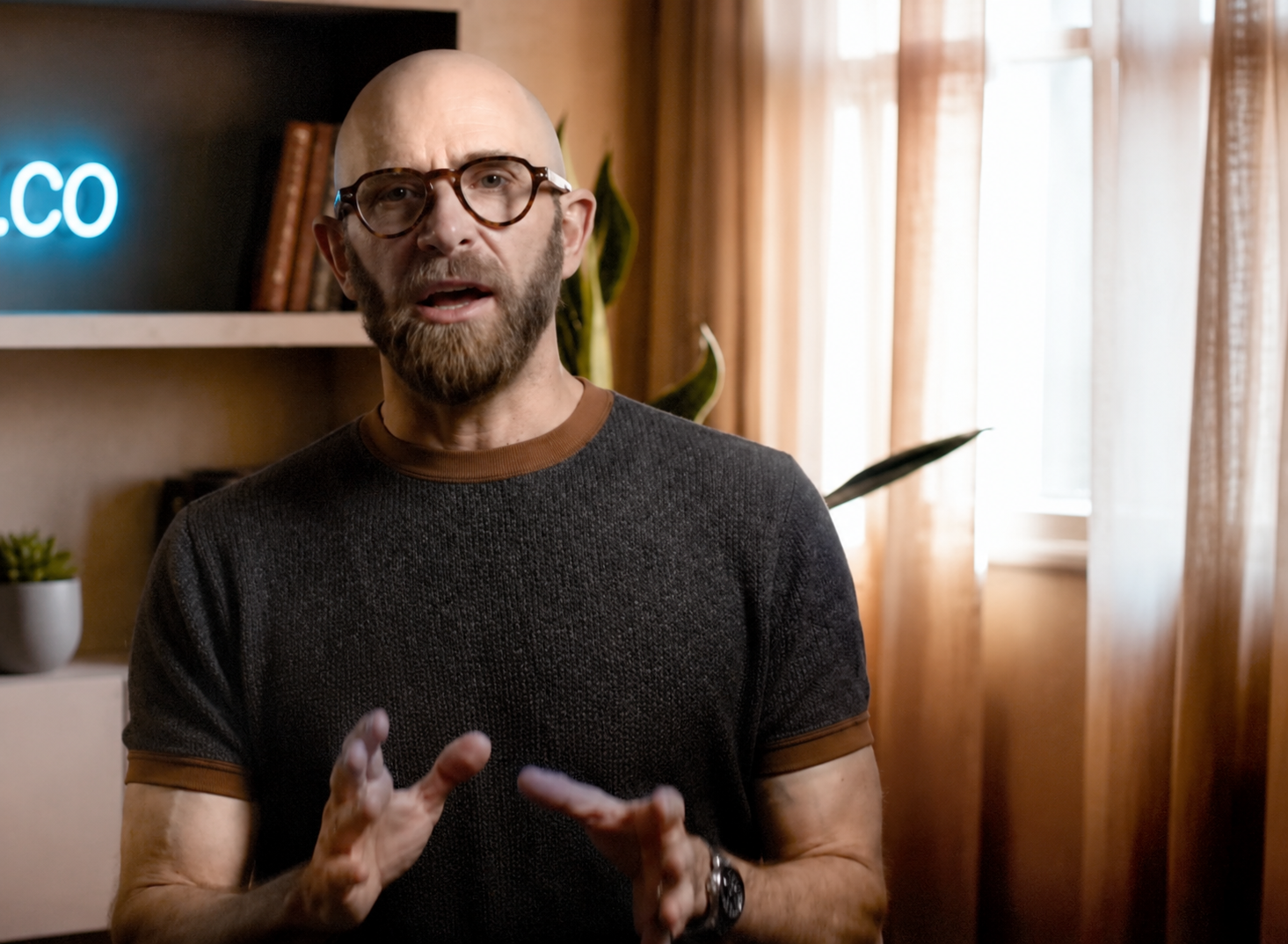
Simon Whistler
Simon Whistler is one of YouTube's most prolific educational creators. HomeFronts is his deep dive into geopolitics, modern conflict, military history, and the civilian and societal dimensions of global events.
Frequently Asked Questions
How did young men vote in the 2024 US presidential election? Exit polls put Trump’s share of young men at 56 percent to Harris’s 42 percent — a 16-point margin and the largest share of voters under 30 for any Republican since 2008. Trump also gained ground with young women, though most still voted for Harris.
Is the rightward shift among young people only an American phenomenon? No. It is visible across much of Europe. In France, the National Rally reached 32 percent among 18-to-33-year-olds by 2024. In Germany, the AfD nearly tripled its youth-vote share as the Greens collapsed by 23 points to just 11 percent. The breadth across different systems suggests a deeper cause.
What happened to climate change as a priority for young voters? It was largely displaced by more immediate concerns. In Germany, the share rating environmental protection “very important” fell by double digits in five years, and when asked their top worries in 2024, 41 percent of those aged 14 to 29 named immigration and the cost of living. Young people did not stop caring about the climate so much as reprioritize.
If young people lean economically left, why are they moving right? Favorability toward capitalism among 18-to-34-year-olds has turned sharply negative, and figures like Bernie Sanders and Zohran Mamdani retain real support. But many young people feel the right is the side actually addressing their economic pain — tying it to visible causes like inflation and the border — while center-left leaders came across as out of touch. They are drifting right in spite of conservative economic policy, not because of it.
Why does religion factor into this story? A “meaning vacuum” has opened, and faith is filling part of it. Belief in God among UK 18-to-24-year-olds rose from 16 percent in 2021 to 37 percent by late 2025, with Catholicism — not the Church of England — growing fastest. The US shows a parallel revival of young converts, and young Muslims in France and the UK are more practicing than their parents.
Who are the more troubling figures benefiting from this shift? Beyond mainstream conservatism, the vacuum has drawn in extremists. Nick Fuentes leads the “groyper” movement with a following in the millions and has praised Hitler and Stalin. Andrew Tate, facing serious criminal charges, reached nearly eight in ten British boys aged 16 to 17, a third of whom saw him as a role model. At the furthest edge sit radicalized teenagers linked to planned or attempted violence.
Will this realignment last? It may diverge by region. In the US, Trump’s youth gains already look fragile, his approval with the group has slipped, and his coalition is fracturing. In Europe, the trend shows little sign of reversing, with once-fringe parties now outpolling the traditional center-left and center-right.
Sources
- When Your Son Goes MAGA — The New York Times
- 2024 Post-Election Survey: Gender and Age Analysis — Navigator Research
- Unpacking the 2024 Youth Vote — NPR
- Obama Still Opposes Same-Sex Marriage — CBS News
- Biden, “Illegals,” and the State of the Union — The Guardian
- Biden Regrets Saying “An Illegal” — Vanity Fair
- How Groups Voted 2020 — Roper Center
- Young Men, Voters, Trump, 2024 Exit Polls — Axios
- Trump Improved With Young Men, Drew Young Women — NBC News
- Présidentielle 2022: Pour Qui Ont Voté les Jeunes — CIDJ
- Europe Election, Youth and the Far Right — CNN
- Germany Survey Shows Every Other Person Feels Unsafe — DW
- Young Germans and the AfD in European Elections — The Guardian
- Person of the Year 2019: Greta Thunberg — Time
- Trudeau, Greta Thunberg, and Climate Action — CBC
- Knight-Ipsos Poll: College Students and Free Speech — Knight Foundation
- Performative Virtue Signaling and Higher Ed — The Hill
- Remarks on Immigration Law and Policy — Vote Smart
- Archive Fact-Checking — AP
- Obama on Immigration, Now and Then — CIS
- Bill Clinton’s State of the Union Address, 1996 — Ballotpedia
- Capitalism at a 15-Year Low in Popularity — Business Insider
- Trump on Bringing Grocery Prices Down — ABC News
- Bidenomics Is Working — Biden White House Archives
- Harris 2024 Campaign and Biden — CNN
- Constituency Election Result — UK Parliament
- Net Migration Roller-Coaster — Migration Observatory, Oxford
- Trump, Inflation, and the Economy Poll — The Hill
- Education Department, FAFSA, College Earnings — The Hill
- Student Loan Debt Statistics — Education Data Initiative
- Iowa Caucus Results: Bernie Sanders and Young Voters — Time
- The Religious Shall Inherit the Earth — The Guardian
- Protestant Christians Embrace LGBTQ Diversity — HRC
- Evangelicals Shift Toward Acceptance on Divorce — Religion News
- Decline of Christianity Continues at Rapid Pace — Pew Research
- Brits’ Beliefs About God — YouGov
- Catholicism Spreads Among Young Britons — Reuters
- Catholics Outnumber Anglicans Among Gen Z Churchgoers — The Times
- IFOP Analysis, November 2025 — IFOP
- IFOP Study on French Islam Sparks Controversy — Euro-Islam
- Meet America’s Newest Catholics — The Free Press
- Are 30-40% of Conservative Gen Z Staffers Really Groypers? — UnHerd
- Andrew Tate Banned From Facebook and Instagram — NPR
- Tate Brothers UK Charges — CNN
- Andrew Tate — Hope Not Hate
- 1 in 3 Have a Positive View of Andrew Tate — Savanta


