
On the sixth of November, 2025, Zohran Mamdani became the mayor-elect of New York City. He is thirty-four years old, a member of the Democratic Socialists of America, and a Muslim immigrant who has called New York home since the age of seven. Barely a year before his win, he was practically unknown, even across much of America’s largest metropolis. Then came a campaign that set the city alight and turned a three-way mayoral race into a nationwide spectacle, and Mamdani took the vote with more support than both of his competitors combined.
A New York mayor is not, in any official or traditional sense, a national political figure. But Mamdani is now charged with the stewardship of a city of more than eight million people, a population larger than all but twelve of America’s fifty states. That alone guarantees him an outsize impact, both on New York and on the wider political landscape across the United States. His candidacy was a controversial, even polarizing affair: a bellwether for a Democratic Party trying to recover from a punishing defeat the year before, and a lightning rod for the dominant MAGA wing of the Republican Party.
He is, by a wide margin, the most prominent American elected to any nationwide-watched office in 2025. At least until the midterm elections the following year, his work as mayor will be examined under a microscope in a way no other newly elected official will experience.
Situation Brief
- Zohran Mamdani won the 2025 New York City mayoral race, capturing over fifty percent of the citywide vote with 91 percent of returns reported, more than both of his rivals combined.
- He takes office on the first of January, 2026, as the 111th mayor of New York, the city’s first Muslim mayor, its first of South Asian descent, its first born in Africa, and the youngest to lead it in over a century.
- His platform centers on affordability: a thirty-dollar minimum wage, higher taxes on millionaires, 200,000 new affordable housing units, free public transit, universal childcare, and city-run grocery stores.
- Mamdani rose from near-anonymity as a state assembly member from Queens by combining social-media reach with disciplined grassroots organizing and a relentless focus on cost of living.
- He defeated former governor Andrew Cuomo, who ran in the general election after losing the Democratic nomination, and Republican Curtis Sliwa, who won just seven percent.
Mamdani’s victory is a singular event in modern American politics, and what it signals reaches far beyond the five boroughs of New York City.
A Near-Unknown Becomes a Front-Runner
When Mamdani announced his candidacy, he was a modest member of New York’s 150-seat State Assembly, a young and active but largely unknown politician representing constituents in the borough of Queens. His focus there was housing access, affordability, diversity, and the everyday concerns of ordinary residents. He was, and remains, a member of the Democratic Socialists of America, holding that affiliation alongside his membership in the Democratic Party.
Across most of the country, running for office as an open, self-described socialist of any kind would be a rare gamble. New York City is different. It is a place where America’s democratic socialists are unusually well represented, in a city that leans substantially further to the left than the nation as a whole. That distinctive political terrain gave Mamdani a foothold that would have been almost unthinkable elsewhere, and it set the stage for an improbable rise.
An Unusual Race in an Unusual Year
Mamdani entered the 2025 contest at what could charitably be called an interesting moment in city politics. The incumbent, Eric Adams, was a former police officer who had spent time under investigation for bribery, fraud, and the solicitation of foreign campaign donations. Adams dropped out in September after his support collapsed in the polls, having tried to win re-election as an independent.
Watch on HomeFronts
Watch the full video analysis on the HomeFronts YouTube channel, presented by Simon Whistler.
On the Democratic side stood former state governor Andrew Cuomo, the presumptive nominee and likely winner before Mamdani’s campaign gained traction. Cuomo enjoyed near-universal name recognition and deep party connections, but he had resigned in 2021 amid a cascade of sexual harassment allegations. Rounding out the field was Republican Curtis Sliwa, an unlikely contender in a city where no Republican has won the mayoralty since 1997, and a candidate known largely for an aging-New Yorker persona and for reminding everyone that he had once been shot five times in an attempted mafia hit.
Why Mamdani Caught Fire
Few expected Mamdani’s candidacy to make waves in a field crowded with better-entrenched figures. But he began gaining momentum for three reasons at once.
First, as a young, charismatic, and very online candidate, he used social media to striking effect, backing his TikTok appeal with a well-organized grassroots operation on the ground. Second, he deliberately steered away from the pageantry and international influence that New York mayors have historically enjoyed. Instead, he concentrated squarely on the city’s affordability crisis for residents of low and medium income, pitching a thirty-dollar minimum wage, a tax increase on millionaires, and a range of related measures.
Third, as a dynamic and unconventional outsider, he became an obvious contrast candidate. At a moment when many New Yorkers felt city politics had been captured by out-of-touch, corrupt elites, Mamdani was their opposite: a passionate, locally connected organizer with a personal income of less than $150,000 a year, who understood the city as someone who had grown up in it as an immigrant of modest means rather than the scion of a political dynasty.
The Shape of the Win
Even many voters skeptical of Mamdani’s politics, his ability to deliver on his promises, his relative inexperience, or his choice to call himself a democratic socialist, were intrigued enough to back him anyway. The package he offered proved more than enough. Though not every ballot had been counted, he appeared to have captured over fifty percent of the citywide vote with 91 percent of returns reported.
He will take office on the first of January, 2026, as the 111th mayor of New York City. Fittingly for a mayor with so many ones in his title, he will be the city’s first-ever Muslim mayor, its first of South Asian descent, and its first born in Africa, as well as the youngest person to lead it in more than a hundred years. These firsts are not incidental. They make Mamdani a symbol as much as an administrator, and they amplify the national attention his every decision will attract.
An Ambitious Agenda
Like any official anywhere, Mamdani will not be able to accomplish everything he would like. What he will or will not achieve remains to be seen, but his stated ambitions are clear and far-reaching.
He wants to raise the city’s minimum wage to a level he believes could make life in New York affordable for all residents, funded in part by higher taxes on millionaires and especially the city’s very wealthiest. On housing, he proposes a Social Housing Development Agency to oversee the construction of 200,000 affordable units within the next ten years. He has floated free public transit, beginning with the city bus service, and universal childcare for every child from six weeks to five years old. He has also pitched a pilot program of subsidized, government-run grocery stores to counter rising food prices.
Critics and supporters alike acknowledge that these programs are very ambitious, and how many will prove workable is an open question. For now, though, these are the policies New Yorkers voted for, and the ones they may well get.
A National Lightning Rod
Mamdani’s rise is a seismic shift for New York, but it has also made waves across the country. Whether he welcomes it or not, his success makes him a more nationally relevant figure, and his campaign, his record as mayor, and the broader implications of his identity will drive political conversation for months and years to come.
His tenure is likely to become a key dividing line between Republicans and Democrats. He has drawn intense criticism from President Donald Trump and the wider MAGA movement, and Trump’s approach has been anything but subtle. The president has called Mamdani a communist and a lunatic, and threatened to withhold funding from New York and punish the city in other ways, including potential deployments of immigration enforcement agents that Mamdani has vowed to oppose. Republican allies have pressed the Department of Justice to investigate his claim to citizenship and potentially even to denaturalize and deport him, while accusing him of supporting jihadist terrorism or being a member of Hamas.
Mamdani has pushed back, telling the president directly to “turn up the volume” as he was cheered during his victory speech. But as powerful as New York is, a contest between the Big Apple and the White House is one in which the White House holds decisive advantages. Many analysts expect Trump and the MAGA movement to force that fight and to make Mamdani a recurring target.
Friction Within His Own Party
The opposition is not only external. Within the Democratic Party, Mamdani has faced sharp condemnation from moderates, some of whom believe his policies are incompatible with the party’s values, and some of whom see him as a more existential threat to the political establishment.
His primary opponent, Andrew Cuomo, could not beat him for the Democratic nomination but chose to run anyway in the general election, capturing over forty percent of the vote share in a city where the Republican candidate won just seven percent. That persistence underscores how much of the city’s establishment remained wary of Mamdani. He has also faced considerable opposition from New York’s finance world, a deep concentration of wealthy figures with the means to make his life difficult should they choose to.
A Living Embodiment of America’s Divides
Mamdani’s ascent sends ripples across nearly every fault line of modern American politics. He is a self-identifying democratic socialist at a time when Trump and the MAGA movement have cast even mild forms of leftist ideology as dangerous radicalism, in a country where the label “socialist” is, for many citizens, immediately disqualifying. He is an immigrant, and a non-white one, at a moment when federal deportation efforts have become a central and deeply divisive issue.
He is the mayor of America’s biggest city, at a time when the divide between urban liberals and rural conservatives shapes the very character of national politics. And he is a young, social-media-savvy economic populist, at a time when a growing share of Americans distrust politicians, corporations, the media, and the ultra-wealthy almost by default. The country is polarized in countless directions, and for supporters and detractors alike, Mamdani has become a living embodiment of many of those tensions.
What It Means for the Democrats
His victory arrives as the Democratic Party searches for a path forward, still wounded from its 2024 defeat and led by figures who cannot seem to agree on how to become competitive again. Mamdani was far from the only Democrat to win on election night; in scattered state and local races, the party’s candidates and causes prevailed almost everywhere they appeared. But his win was, by far, the largest and most consequential.
For party leaders urging Democrats to take more risks, to elevate a new generation of leaders, and to fight harder for their convictions, Mamdani is proof that the public is hungry for that approach. Defeating both an incumbent mayor and a former governor from one of New York’s most powerful political families, as a near-unknown before the race, is stunning. That he did so as a young candidate relying on grassroots organizing and social media, without softening a platform on the far left of American discourse, sharpens the lesson.
Yet the skepticism about Mamdani and the enduring support for his opponent fueled the counterargument. Some party leaders maintain that his platform would not have worked outside a liberal bastion like New York. Democrats who won elsewhere on the same night, including Virginia governor-elect Abigail Spanberger and New Jersey governor-elect Mikie Sherrill, are relative moderates in policy, demeanor, and strategy, and they swept their races too.
The Road Ahead
No matter what comes next, Zohran Mamdani is poised to be one of America’s defining political leaders for at least the next several years. He will get the chance to put his ambitious and contested policies into practice. And whether he wants to or not, he will discover whether his political appeal can withstand a protracted confrontation with the Trump administration.
How that struggle will end, no one can yet say. But anyone watching American politics over the coming years would do well to watch Zohran Mamdani, and see what happens.
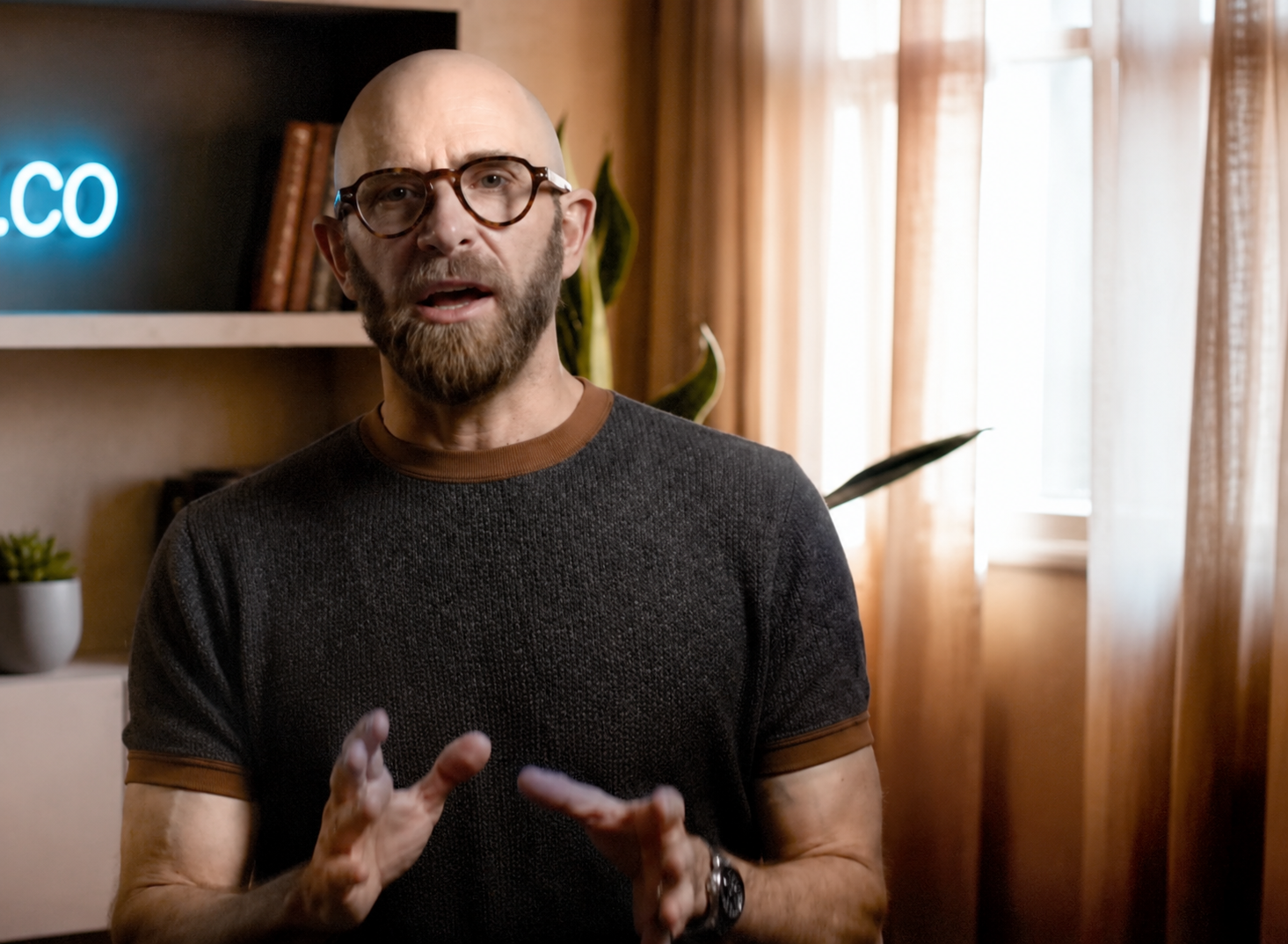
Simon Whistler
Simon Whistler is one of YouTube's most prolific educational creators. HomeFronts is his deep dive into geopolitics, modern conflict, military history, and the civilian and societal dimensions of global events.
Frequently Asked Questions
Who is Zohran Mamdani? He is a thirty-four-year-old member of the Democratic Socialists of America and a Muslim immigrant who has lived in New York City since the age of seven. Before running for mayor, he served in the New York State Assembly, representing constituents in Queens with a focus on housing, affordability, and diversity.
How decisively did he win the mayoral race? Mamdani captured more support than both of his competitors combined. Although not all ballots had been counted, he appeared to have won over fifty percent of the citywide vote with 91 percent of returns reported.
When does he take office, and what records does he set? He takes office on the first of January, 2026, as the 111th mayor of New York City. He will be the city’s first Muslim mayor, its first of South Asian descent, its first born in Africa, and the youngest person to lead it in more than a hundred years.
What are his main policy proposals? His agenda focuses on affordability. It includes a thirty-dollar minimum wage, higher taxes on millionaires, a Social Housing Development Agency to build 200,000 affordable units over ten years, free public transit beginning with buses, universal childcare from six weeks to five years old, and a pilot program of subsidized, government-run grocery stores.
Who were his main opponents? Former governor Andrew Cuomo, who lost the Democratic nomination but ran in the general election and took over forty percent of the vote, and Republican Curtis Sliwa, who won just seven percent. The incumbent, Eric Adams, dropped out in September after his polling collapsed.
Why has he drawn opposition from President Trump? Trump and the wider MAGA movement have criticized Mamdani intensely, with the president calling him a communist and a lunatic and threatening to withhold federal funding. Republican allies have pushed the Department of Justice to investigate his citizenship and potentially to denaturalize and deport him.
Why does his win matter beyond New York City? As mayor of America’s largest city and the most prominent figure elected nationally in 2025, Mamdani sits at the intersection of America’s biggest divides over socialism, immigration, the urban-rural split, and distrust of elites. His success has reignited the Democratic Party’s debate about whether a bold progressive approach or a more moderate one is the better path forward.
Sources
- The Guardian — Improbable victory for city’s first Muslim mayor
- ABC News — New York to resist Trump intimidation, says mayor-elect Zohran
- BBC News — Live coverage
- The Independent — Debra Messing on the New York election
- The New York Times — NYC mayor election: Mamdani takeaways
- New York Post — Zohran Mamdani elected NYC mayor, live updates
- Fox News — Socialist shockwave: Zohran Mamdani stuns NYC voters
- The Washington Post — Trump, Mamdani and Jewish voters in New York
- The Atlantic — Mamdani, Trump, and New York City
- AP News — Mamdani, Cuomo, Sliwa in the NYC mayoral race
- Axios — Zohran Mamdani wins the NYC mayor race
- The Wall Street Journal — Election Day 2025 live coverage
- NBC News — New York City mayor election winner, 2025 race
- BBC News — Article cew44175vklo
- BBC News — Article cly4kr8gzr2o
- Financial Times — Coverage of the New York result
- Politico — Zohran Mamdani wins mayor of New York City
- Bloomberg — Mamdani wins race to become next mayor of NYC
- Vox — Zohran Mamdani, NYC mayor, and democratic socialism
- The Guardian — Zohran Mamdani campaign promises analysis
- The New York Times — Results: New York City mayor
- The Guardian — Mamdani victory speech and Trump policies
- NBC News — Calls to strip Mamdani’s citizenship and Trump’s denaturalization power
- New York Post — House Republicans push to denaturalize Mamdani
- The Atlantic — Zohran Mamdani, mayoral candidate
- ABC7 NY — Mamdani gets endorsement from Bernie Sanders
- Forbes — How much New York City mayoral candidate Zohran Mamdani is worth
- Fox 5 NY — When does Zohran Mamdani take office
- Politico Magazine — Mamdani, groceries, and politics
- NBC News — Virginia governor election results: Spanberger
- AP News — Mikie Sherrill wins New Jersey governor race


