
“We are not willing to sacrifice our national security for a social media app.” That line from U.S. Treasury Secretary Scott Bessent captures the full arc of the TikTok saga: a years-long standoff that pitted Washington against TikTok and Beijing, reshaped how policymakers think about technology, and forced Americans to confront uncomfortable questions about digital privacy at a moment when data collection has never been more pervasive.
What began during President Trump’s first term — an executive order to ban TikTok over national security concerns — carried into the Biden years on a wave of bipartisan momentum. That momentum culminated in April 2024, when Congress passed the Protecting Americans from Foreign Adversary Controlled Applications Act, known as PAFACA. The law gave ByteDance, TikTok’s Beijing-based parent company, 270 days to sell the app to a non-Chinese entity or face a nationwide ban.
By the 2024 election, TikTok had become a genuine political flashpoint. Trump executed a striking reversal, moving from threatening to ban the app to promising to rescue it. Once in office, he declined to enforce PAFACA, extending the deadline repeatedly until a buyer could be found. Now, after a call between Trump and Chinese President Xi Jinping, an agreement has finally been reached to keep TikTok alive in the United States.
Situation Brief
- PAFACA, passed in April 2024, gave ByteDance 270 days to divest TikTok’s U.S. operations to a non-Chinese owner or face a ban; Trump repeatedly extended the deadline rather than enforce it.
- Under the agreement, TikTok U.S. receives a licensed copy of the algorithm from Beijing, which Oracle engineers will retrain on U.S. servers using U.S. data, with Oracle also monitoring for surveillance.
- A new joint venture run by U.S. investors and ByteDance takes control of TikTok’s American arm; ByteDance is limited to owning less than 20 percent of the entity.
- Possible investors include Oracle, Silver Lake, Fox Corporation, and Dell — a roster with conservative or conservative-friendly leanings that fuels concerns about politicization.
- Washington declined golden shares or an equity stake, leaving compliance to rest on Oracle’s monitoring, the board’s governance, and yet-to-be-finalized audits.
The deal raises three pressing questions: what does it actually contain, who gains the most from it, and why do both Washington and Beijing claim it as a win? The answer reveals a bargain less about who owns an app than about who writes the rules of the digital century.
The Algorithm at the Heart of the Standoff
Any honest accounting of the deal has to start with the algorithm — the recommendation engine that powers TikTok’s addictive feed of short videos and explains why the app commands so much of its users’ attention in the first place. Control over that engine became the single hardest knot to untie. Chinese law requires the algorithm to remain under Beijing’s control, while American law effectively demands the reverse. It was, in every sense, a match made in diplomatic hell.
The compromise, according to a senior White House official, is that TikTok U.S. will receive a licensed copy of the algorithm from Beijing. Oracle engineers will then retrain that copy on U.S. servers using U.S. data — a step designed to stop Beijing from shaping what Americans see in their feeds. Oracle will also monitor the algorithm on an ongoing basis to ensure there is no surveillance flowing back to China. On paper, it is an elegant solution to an apparently irreconcilable conflict of laws.
In practice, the arrangement leaves room for doubt, because licensing a copy is not the same as owning the underlying design.
Why the Skeptics Aren’t Convinced
The licensing framework has drawn pointed criticism from analysts who study Chinese technology. Craig Singleton, a senior fellow at the Foundation for Defense of Democracies, told POLITICO that the plan — “importing a copy of ByteDance’s algorithm and retraining it on U.S. data — still leaves TikTok’s core code tied to Beijing.” His warning cut to the technical heart of the matter: “Algorithms aren’t static formulas; they evolve through updates and tuning. Unless the entire architecture and IP are severed, Washington hasn’t achieved independence, it’s just rebranded dependence.”
The unease is not confined to outside experts. Members of Congress have questioned whether the arrangement actually satisfies the law if the algorithm remains, in any meaningful sense, under Beijing’s thumb. Representative John Moolenaar, the Republican who chairs the House Select Committee on the Chinese Communist Party, wrote that he was “concerned the reported licensing deal may involve ongoing reliance by the new TikTok on a ByteDance algorithm and application that could allow continued CCP control or influence.”
The White House acknowledged the concerns and promised to engage with lawmakers to ensure the deal complies with the law — a commitment that places the burden of proof squarely on implementation rather than on the announcement itself.
Watch on HomeFronts
Watch the full video analysis on the HomeFronts YouTube channel, presented by Simon Whistler.
Ownership: A Who’s Who of Corporate America
Beyond the algorithm, the second pillar of the deal is ownership. The agreement creates a joint venture, run by U.S. investors alongside ByteDance, that takes control of TikTok’s American operations from the Beijing-based parent. To satisfy PAFACA’s divestiture requirement, ByteDance will be permitted to own less than 20 percent of the new entity, a threshold meant to put the app’s center of gravity firmly on American soil.
The list of American investors remains in flux, but the names floated so far read like a corporate honor roll. There is Oracle, the tech giant tasked with managing the algorithm. There is Silver Lake, the private equity firm with deep experience in technology investments. Fox Corporation is expected to represent the interests of Rupert Murdoch and his heir, Lachlan Murdoch. And Dell appears through Michael Dell’s namesake company.
Oversight is meant to come from a new seven-member board drawn from people with national security and cybersecurity backgrounds. ByteDance will get a single seat on that board — but, crucially, no role on the app’s security committee, the body that will police exactly the surveillance risks that animated the law in the first place.
Where Americans’ Data Will Live
The agreement also addresses the question that first put TikTok in the political crosshairs: where, and how securely, American user data is stored. TikTok had long faced accusations that U.S. citizens’ data could be readily accessed from China. Its earlier answer was Project Texas, a partnership with Oracle to route U.S. user traffic through domestic servers and wall it off from foreign access.
The new deal builds on that foundation rather than discarding it. Under the agreement, all American data will be held in a purpose-built cloud environment located in the United States and operated by Oracle. The continuity matters: rather than inventing a data-security regime from scratch, the parties are extending an architecture that has already been tested, and that gives the arrangement a measure of credibility it might otherwise lack.
Still, data localization addresses only one of the two fears at play. Storing data domestically guards against unauthorized access; it does little, on its own, to settle the separate worry about who shapes the feed.
What the Deal Leaves Out
Almost as revealing as what the deal contains is what it omits. According to Bloomberg, the U.S. government will not hold golden shares or take an equity position in the new entity, nor will it appoint directors. Golden shares give governments a say over certain business decisions — an instrument far more common in other countries than in the United States.
That omission is striking given recent precedent. After the Trump administration acquired 10 percent of Intel and invoked golden shares to block U.S. Steel from shutting down production at an Illinois plant, many assumed the White House would seek a similar lever over TikTok. It chose not to.
The decision suggests that, for all the heated rhetoric about national security, Washington is content to leave operational oversight to the private sector. The entire weight of compliance will therefore rest on Oracle’s monitoring systems, the board’s governance, and whatever auditing procedures are eventually agreed upon — a notably hands-off posture for a deal sold on security grounds.
Leverage, Deadlines, and the Threat of Probation
The administration is not entirely without leverage. In the short term, Trump is set to sign an executive order extending the PAFACA ban by 120 days to give the transaction time to close. That deadline pressures TikTok to finish the deal or risk the very ban it has spent years trying to avoid.
The catch is that deadlines have not always meant much. Trump has repeatedly set hard dates for other policy goals — sanctioning Russia, for instance — only to let them slide without consequence. That track record has bred enough cynicism in Washington that some observers now reach for the acronym TACO, shorthand for “Trump Always Chickens Out.”
Longer-term leverage may prove more durable. Congress retains the option of enacting stricter regulations if lawmakers conclude that the letter or spirit of the agreement is being ignored. That standing threat effectively places TikTok in a perpetual state of probation, where any perceived backsliding could reopen the whole fight.
Is This a Win for Trump?
If the deal is finalized — and the signs point that way — Trump can plausibly claim one of his signature victories. He can argue that he resolved a thorny national security problem while also rescuing an app used by more than 170 million Americans, and that he did both while standing up to China. He also threaded a difficult political needle with the midterms looming.
Banning TikTok outright might have handed Democrats an easy win with young voters; doing nothing might have branded him the president who let China keep its grip on American data. Instead, he gets to present himself as the leader who secured free expression and national security in a single stroke — a narrative tailor-made for the campaign trail.
The deeper victory may lie in who takes over the app. The likely investors — the Murdochs, Michael Dell, and Oracle’s Larry Ellison — are all either conservative or hold conservative-friendly credentials. Should the platform begin to lean right, it would slot into a broader realignment of American media power.
A Broader Realignment of Media Power
That realignment is already visible elsewhere. Elon Musk’s purchase of Twitter, now X, turned a former hub of liberal discourse — one that banned Trump after the violence of January 6th — into a space where conservative voices dominate, for better or worse. Meta, which had also banned Trump, pivoted toward accommodation, elevating his allies to senior roles and scrapping its fact-checking program.
The shift extends beyond social media. Axios reported that Skydance’s acquisition of Paramount handed Larry Ellison’s son, David, control of CBS News, and the Ellisons are pursuing a bid for Warner Bros. Discovery that would bring CNN under their umbrella. If it succeeds, two pillars of American journalism would sit under a single Trump-aligned family.
The picture is not one-dimensional. The Ellisons are technically responsible for South Park, whose current season has skewered the president relentlessly; when controversy erupted over its mockery, David Ellison defended the show’s right to offend. Ownership, in other words, does not guarantee deference — even if the trend toward consolidation under sympathetic hands is unmistakable.
The Press, the Public, and the User Test
The realignment lands at a charged moment. Trump has sharpened his attacks on the press, claiming that 97 percent of his coverage is negative and even suggesting that reporters who cover him unfavorably are breaking the law — an assertion that sits uneasily with the First Amendment. Little wonder that advocates have begun sounding alarms about the potential politicization of TikTok.
Seth Stern, director of advocacy at the Freedom of the Press Foundation, told Al Jazeera that Trump “said just days ago that he thinks criticism of him should be illegal,” and warned that steering “control of one of the country’s most popular social media platforms to his billionaire political allies” invites censorship of critics and amplification of friendly content. The White House dismissed such claims as delusional conspiracy theories with no basis in reality.
Whatever the app’s eventual political tilt, the real test will be the user experience. Jasmine Enberg, principal social media analyst at eMarketer, told the BBC that changes to how TikTok works for U.S. users could push them away or erode the app’s value for creators, brands, and investors. “Material (or even perceived) changes to the content, algorithm or app policies could prompt massive shifts in user behaviour,” she said.
Should TikTok hemorrhage users the way X did after Musk’s takeover, Trump will have spent political capital — and his allies real capital — on a platform that no longer carries the cultural weight it once did. If it holds steady or grows, conservatives gain something more durable than bragging rights: a direct hand in shaping the information diet of America’s youngest voters.
Is This a Win for China?
Turn from Washington to Beijing, and the obvious question follows: why did China agree at all? On the surface, the deal looks like a capitulation. One of China’s premier tech exports — an algorithm that changed how the world consumes entertainment — is passing into the hands of a rival superpower. Even a licensed copy gives the United States access to, and the ability to learn from, one of the most coveted products in consumer technology. Under any light, that is hard to call a win.
Yet that framing may overstate TikTok’s value to Beijing. The app is certainly important as a revenue source and a vehicle for Chinese soft power. But in the broader picture, it is only a slice of ByteDance’s portfolio — and a smaller slice still of China’s vast technology ecosystem. Samm Sacks, a senior fellow at Yale Law School who studies Chinese technology, put it bluntly to PBS News Hour: “I don’t think Beijing cares about TikTok, but I think they realized they have a real opportunity here because Trump does and they have bigger fish to fry.
They may be using this as an opening to extract larger concessions.” Those concessions, in her view, are likely to surface in a trade deal over computer chips or in negotiations over Taiwan.
The TikTok Template and the Talent Race
Beyond serving as a bargaining chip, the deal may benefit China by establishing what some call a “TikTok Template” — a blueprint other Chinese firms, such as the electric-vehicle maker BYD or the battery giant CATL, could use to deploy their technology inside the United States. Tech expert Kevin Xu has argued that such a template could let ready-to-go Chinese technologies central to national competitiveness, like batteries and rare earths, flow into the American market more easily. Beijing could then frame the outcome as a win, exporting Chinese-made technology on its own terms rather than being shut out of the U.S. market entirely.
The most consequential calculation may be the longest-term one. China may have accepted the deal on the bet that the country controlling TikTok will matter far less than the country that wins the global race for STEM talent. Over a recent weekend, the Trump administration announced changes to America’s H-1B visa program — the category that lets companies bring in highly skilled foreign workers — including a new annual fee of $100,000.
The stated aim is to push firms toward local hiring and curb overuse of the program. Several experts warn it could instead discourage skilled workers from choosing the United States at all.
Who Sets the Rules of the Digital Future
Many of those workers may now look to China, which recently unveiled the K Visa, described by some analysts as Beijing’s answer to the H-1B. Unlike the American program, the K Visa requires no employer sponsorship and lets holders take part in academic, scientific, technological, cultural, entrepreneurial, and business exchanges. Free of the sponsorship restrictions that bind H-1B holders, it could become an appealing alternative for ambitious global professionals who might once have flocked to Silicon Valley — which may be precisely the outcome Beijing is counting on.
China still carries the prestige of having built one of the most powerful consumer tech tools in recent memory, and that prestige helps draw engineers, data scientists, and AI researchers eager to work at the cutting edge. If those people come to see China as offering both opportunity and a smoother path to entry, China stands to become the global technology leader regardless of who ends up owning TikTok. In the end, the deal is less about control of a single app than about who sets the rules for the digital future — a contest likely to shape geopolitics for the whole of the 21st century. Both Washington and Beijing can declare victory precisely because they are measuring different prizes.
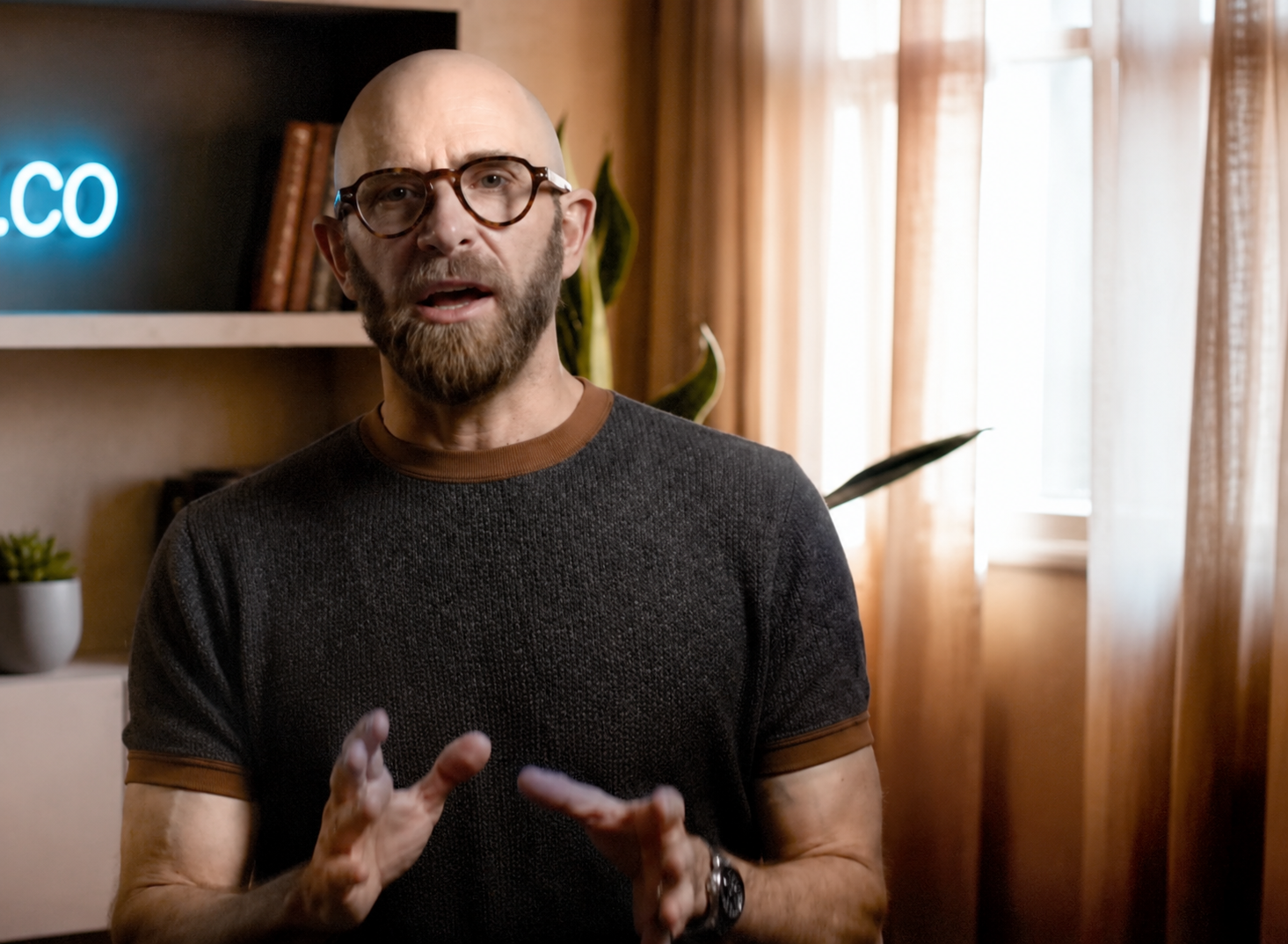
Simon Whistler
Simon Whistler is one of YouTube's most prolific educational creators. HomeFronts is his deep dive into geopolitics, modern conflict, military history, and the civilian and societal dimensions of global events.
Frequently Asked Questions
What is PAFACA, and what did it require? The Protecting Americans from Foreign Adversary Controlled Applications Act, passed by Congress in April 2024, gave ByteDance 270 days to sell TikTok to a non-Chinese entity or face a nationwide ban. Rather than enforce it, Trump extended the deadline repeatedly until a buyer was found.
What happens to TikTok’s algorithm under the deal? TikTok U.S. receives a licensed copy of the algorithm from Beijing. Oracle engineers retrain that copy on U.S. servers using U.S. data to prevent Beijing from shaping recommendations, and Oracle monitors the algorithm to guard against surveillance. Critics argue that licensing a copy still leaves the core code tied to Beijing.
Who will own the new TikTok entity? A joint venture run by U.S. investors and ByteDance takes control of TikTok’s American arm. ByteDance is limited to less than 20 percent ownership. Potential investors named include Oracle, Silver Lake, Fox Corporation, and Dell, with oversight from a seven-member board focused on national security and cybersecurity.
Will the U.S. government hold a stake in TikTok? No. According to Bloomberg, the government will not hold golden shares or an equity position, nor will it appoint directors — despite earlier moves such as taking a 10 percent stake in Intel and using golden shares with U.S. Steel. Compliance instead rests on Oracle’s monitoring, the board, and future audits.
How will Americans’ data be protected? The deal builds on Project Texas, the earlier Oracle partnership that routed U.S. traffic through domestic servers. All American data will be stored in a purpose-built cloud environment in the United States, operated by Oracle.
Why might China see the deal as a win? Analysts argue TikTok is a small part of China’s tech ecosystem, so giving up control costs little. Beijing may use the deal as leverage for larger concessions on chips or Taiwan, as a template for other Chinese firms like BYD and CATL to enter the U.S. market, and as part of a longer play to win the global race for STEM talent.
What is the K Visa, and how does it relate to the deal? The K Visa is a new Chinese visa some analysts call Beijing’s answer to the H-1B. Unlike the H-1B, it requires no employer sponsorship and allows holders to engage in academic, scientific, technological, cultural, entrepreneurial, and business exchanges — potentially drawing skilled workers who might otherwise choose the United States.
Sources
- PBS Newswire (YouTube)
- CNBC International (YouTube)
- The Economic Times — China joins the race for top STEM talent with new K Visa
- BBC News
- NPR — TikTok deal joint venture
- The New Yorker — What Trump wants from a TikTok deal with China
- AP News
- TIME — TikTok deal news, Trump, China details
- The New York Times — TikTok deal algorithm
- TIME — TikTok, Trump, surveillance, China
- POLITICO — Trump TikTok sale algorithm
- CBS News — Trump TikTok ownership structure
- CNN — China-US TikTok deal analysis
- Fox Business (video)
- TIME — TikTok US-China deal, ByteDance algorithm
- Reuters — TikTok goes dark for US users
- Bloomberg — No golden share for Trump in TikTok deal
- TikTok U.S. Data Security (USDS)
- The Wall Street Journal — TikTok deal US-China details
- Axios — Trump, MAGA media, CNN, CBS, Ellison, TikTok